
Products Description Tel:+8618309262795
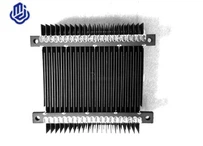
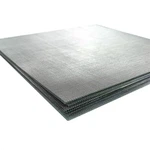
Titanium anode is used for electrochemical water treatment of titanium. The function of the metal oxide coating on the titanium anode is to have low resistivity and good conductivity (titanium itself has poor conductivity). The chemical composition of the precious metal coating is stable, the crystal structure is stable, the electrode size is stable, the corrosion resistance is good, the lifespan is long, and it has good electrocatalytic performance, which is conducive to reducing the overpotential of oxygen and chlorine evolution reactions and saving electricity.

Specification
| Shape | Plate/Mesh/Tube/Rod/Wire/Disc or Customized as the design drawing | |||
| Coating details | Ruthenium and Iridium mixed coating / Contents of the noble material 8 g/m2-25 g/m2 | |||
| Lifetime | 5000~12000 hours | |||
| Application Environment |
1)Density of Current < 2000 Am/M2 2)Contents of hydrochloric acid<20% 3)Cotents of the fluorion<500 mg/L 4)Temperature < 60°C 5)PH value 1-12 |
|||
| Product Features |
1)Stability dimension 2)Lower electricity consumption. 3)High catalytic 4)Effectively production efficiency 5)Strong corrosion resistance,long working life |
Factory Tour


Our Advantages
1
Stable working ability under high current density & Voltage
2
High electrolysis efficiency
3
Stable electrolysis ability
4
High anti-corrosion property
Electrocatalytic oxidation method for wastewater treatment: In recent years, the use of advanced oxidation technology to treat refractory organic compounds in water has become a research hotspot. Advanced oxidation technology, also known as deep oxidation technology, is characterized by the generation of hydroxyl radicals HO · with strong oxidation ability. Under reaction conditions such as high temperature and pressure, electricity, sound, light irradiation, catalysts, etc., it oxidizes and degrades difficult to degrade organic compounds into low toxic or non-toxic small molecule substances. Electrochemical methods for treating wastewater include direct electrolysis and indirect electrolysis, which effectively improve the probability of removing organic matter. Electrolytic oxidation method, also known as electrochemistry, is used to treat water, including domestic sewage, industrial water, and factory wastewater. As it does not cause pollution, it is called green water treatment.
The effect of electrode materials on the treatment of wastewater by electrolysis: Selection of electrode materials: In the process of treating organic wastewater by electrolysis, the electrode not only plays a role in transmitting current, but also plays a catalytic role in the oxidation and degradation of organic matter. Therefore, the selection of electrode materials directly affects the efficiency of organic matter degradation. The degradation reaction mechanism varies with different electrode materials.
The new technology of electrolysis for water treatment has attracted much attention due to its advantages such as no need to add chemical agents, small equipment size, small footprint, and no secondary pollution. It has been used to treat wastewater containing organic compounds such as hydrocarbons, alcohols, aldehydes, ethers, phenols, and dyes. Its bactericidal effect is stronger than chlorine gas, and it is a truly efficient, broad-spectrum, and safe strong sterilization and virus killing agent. It has been widely used for disinfection, epidemic prevention and disinfection and sterilization of various water bodies, including tap water, reclaimed water, industrial circulating water, swimming pool water, hospital sewage, etc. Compared with other disinfectants, sodium hypochlorite solution has significant advantages. It is clear and transparent, soluble in water, completely solving the technical difficulties of gas disinfectants such as chlorine, chlorine dioxide, ozone that are difficult to dissolve in water and cannot be accurately added. It eliminates the safety hazards of liquid chlorine, chlorine dioxide, and other chemicals such as leakage, leakage, and toxicity, and does not produce harmful health and environmental side reactions during disinfection. It also does not have many precipitates caused by the use of bleaching powder.
Titanium electrode is a new product of cathodic protection anode installed on a sodium hypochlorite generator, which catalyzes the oxidation and degradation of water quality through electrode reaction. It is a set of devices that generate sodium hypochlorite solution after electrochemical reaction of low concentration salt water through an electrified electrode. The chemical formula is expressed as follows:
NaCl+H2O → NaClO+H2 ↑ Electrode reaction: Anode: 2Cl -2e → Cl2 Cathode: 2H++2e → H2 solution reaction: 2NaOH+Cl2 → NaCl+NaClO+H2O


Company Profile
Our company is a professional company engaged in titanium electrode and related products.The company's main manganese dioxide titanium anode,iridium titanium ano de, ruthenium titanium anode, iridium ruthenium titanium anode and platinum plated titanium electrode.
The company has a number of professional R & D team, create and apply for approval of a number of scientific and techno logical patents. For example: water treatment,chlor-alkali industry, electrolytic water hydrogen production, ozonesinfection industry, hypochlorous acid disinfeetion industry house hold disinfection equipment and so on
Application of titanium anode
Our company produces titanium anodes for water treatment, which are coated with special materials. Titanium electrodes are essential core devices for disinfectant generators, with simple production processes, low investment, and fast effectiveness. Water and salt are used as raw materials for production, using an AC 220V power supply, making it convenient to obtain materials and easy to produce. The production of disinfectant is stable and high, and the product has a long service life.
The sodium hypochlorite generated after treatment with titanium electrodes can also decompose trace pesticides remaining on agricultural by-products such as vegetables and fruits. It has a significant driving effect on the development of modern agriculture and fruit and vegetable packaging industry. It is also worth affirming that due to the fact that the disinfectant produced by the sodium hypochlorite generator does not produce free chlorine in water like disinfectants such as chlorine gas and chlorine dioxide, it is generally difficult to form carcinogens that are not conducive to human health due to the presence of free chlorine; It is not like ozone, as long as there is a very small amount (0.001mg/m3) in the air, it will cause damage and toxicity to life; Moreover, it will not cause severe corrosion to metal pipelines, as chlorine reacts with water to form hydrochloric acid.
In terms of water treatment, our company's main products include ruthenium metal oxide coated titanium anodes and iridium platinum oxide coated titanium anodes, titanium anodes for tap water and domestic water treatment, titanium anodes for food utensils disinfection, and titanium anodes for swimming pool water disinfection.
In recent years, the production of miniature sodium hypochlorite disinfectant generators has been continuously increasing. The smallest generator has an electrolytic cell volume of only 0.5L, an effective chlorine content of 1.2g/L, and a coated titanium electrode size of 3cm in diameter. The generator is very popular due to its lightweight and portable nature.
Hypochloric acid is a small neutral molecule that can diffuse to the surface of negatively charged bacteria and penetrate through its cell wall to oxidize the interior of the bacteria, thereby killing them. Natural pond water contains Escherichia coli 1.1 × 10⁵/L, total bacterial count 2 × 10⁴ pieces/mL, disinfected with sodium hypochlorite for 5 minutes, the number of Escherichia coli was 100 pieces/L, and the total number of bacteria was only 100 pieces/mL. The disinfected pond water has been tested by the health department and meets the drinking water standards. The small sodium hypochlorite generator is suitable for sterilization and disinfection of unclean drinking water, such as river water, well water, and sugar water. It is particularly useful for field operations, field troops, and areas with water supply systems.
Sodium hypochlorite can quickly kill various pathogenic bacteria and viruses, such as Escherichia coli, Staphylococcus aureus, hepatitis B virus, Bacillus subtilis var. niger spores, etc. Disinfecting household daily necessities and the home environment with disinfectant can effectively prevent infectious diseases such as hepatitis, typhoid fever, cholera, and dysentery.
Sodium hypochlorite can be used for disinfection of tableware and tea sets, with better results than high-temperature disinfection;
Can be used for disinfection, cleaning, and deodorization of kitchen utensils, bathtubs, and sanitary appliances;
Can be used for disinfecting items and clothing used by patients;
Disinfection of baby bottles and toys that can be used for infants and young children;
Can be used for surface disinfection of fruits, fish, and vegetables;
Can be used for disinfection and sterilization of swimming pool water.


Contact information
Country:China
Add:Baoti road,Jintai,Baoji city,Shaanxi,China
Cel/Whatsapp :+86 18309262795
Email:annie@jmyunti.com
Website:www.jm-titanium.com
Hot Tags: pure titanium anode for sewage treatment, China, suppliers, manufacturers, factory, customized, wholesale, buy, price, cheap, sale, quotation, in stock, free sample, Ruthenium Coating Titanium Anode, Titanium Anode For Sewage Treatment, Iridium Coating Titanium Anode, Titanium Anode For Electrolytic Copper Foil, Lead Oxide Coated Titanium Anode, Titanium Anode For Swimming Pool Disinfection