

Baoji Dynamic has been professionally providing electrochemical titanium anodes, MMO coated titanium electrodes and platinized titanium anodes for many years. It mainly produces ruthenium-iridium mixture coated titanium anodes, iridium-tantalum mixture titanium anodes, platinum mixture titanium anodes, electrolytic cells, ion membranes and other titanium anodes and titanium electrodes. The products are widely used in petroleum, chemical, chemical, chlor-alkali, aerospace, aviation, electroplating, electricity, metallurgy, salt making, medicine, as well as shipbuilding, marine engineering, environmental protection engineering and other fields, and customers are all over the country.
Our company uses Japanese technology formula fully automatic hanging sintering furnace equipment, and the special substrate can ensure product life and electrolytic stability. We strive to provide the highest quality materials, adhere to the most stringent quality control system, and provide customers with excellent value.


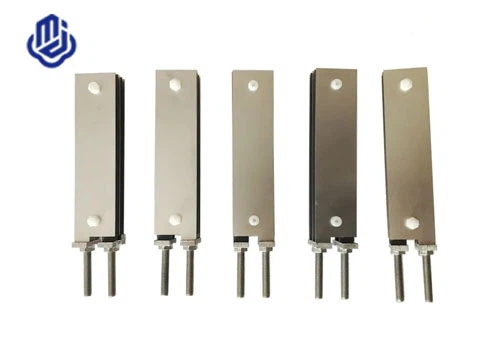


Focus on exporting of electrochemical industrial titanium anodes
Baoji Dynamic Co.,Ltd has more than 20 years of experience in the production of titanium electrodes.
Focusing on the production and research and development of titanium anodes and titanium cathodes in swimming pool disinfection, wastewater treatment, electrolytic water treatment, chlor-alkali industry, descaling, electroplating, etc.
Anode Coating include ruthenium-iridium-coated titanium anodes, iridium-tantalum-coated titanium anodes, platinum-coated titanium anodes, etc.
Titanium anode product specifications
Product application industries
Annual sales of titanium anode products
Titanium anode product sales experience


Focus on the design and production of titanium electrodes (platinum-titanium electrodes, ruthenium-titanium electrodes, ruthenium-iridium-titanium electrodes, iridium-tantalum-titanium electrodes, etc.) and titanium anodes.


Application Of Ruthenium Dioxide Titanium Anode

Sodium hypochlorite electrode
Electrolyte: dilute salt water
Sodium chloride concentration: 3%-5%
Current density: 800-1500A/㎡
Temperature: room temperature

Disinfection instrument electrolyte sheet
Electrolyte: dilute saline
Sodium chloride concentration: 3%-5%
Current density: 800-1500A/㎡
Temperature: room temperature

Fruit and vegetable sterilizer electrolyte sheet
Electrolyte: tap water
Current density: 1.5A 13V
Temperature: room temperature

Chlorate industry
Chlorine evolution potential: ≤1.13
Enhanced weight loss: ≤10mg
Enhanced life:>3000min
Polarization rate: ≤30mv
Hydrochloric acid concentration: 15%

Seawater electrolysis
Electrolyte: seawater
Sodium chloride concentration: 0.3%-3%
Current density: 800-1500A/㎡
Temperature: room temperature

Chlor-alkali industry
Sodium chloride: 315g/L
Current density: 1700A/㎡
Products: CL:H, NaOH

Descaling electrode
Electrolyte: primary water, secondary water
Current density: 200-300A
Temperature: 25-40℃

MMO cathodic protection
Ruthenium-iridium-titanium coating - seawater, the anode product is mainly CL.
Iridium-tantalum-titanium coating - soil, fresh water, brackish water, seawater, the anode product is mainlyO², or CL or both.
Lorem ipsum dolor sit amet consectetur, adipisicing elit
Precious metal electroplating (silver, gold)
Lorem ipsum dolor sit ametli consectetur notted adipisicing elit sed do eiusmod.
Hydrogen generator, electrolytic water generator
Lorem ipsum dolor sit ametli consectetur notted adipisicing elit sed do eiusmod.


Hydrogen-rich water cup, hydrogen-rich water electrolysis device
Lorem ipsum dolor sit ametli consectetur notted adipisicing elit sed do eiusmod.
Electrolytic synthesis of organic matter
Lorem ipsum dolor sit ametli consectetur notted adipisicing elit sed do eiusmod.
excellent corrosion resistance; long electrode service life; electrode specifications and dimensions can be designed according to user needs.

1.Extracting copper and nickel from wastewater from PCB electronic circuit board factories
Chloride ion: 5~50ppm
Sulfate: 120~180g/L
Hydrogen peroxide: 0~5g/L
Copper ion: 50g/L
Stabilizer: 3%
Current density: 3~8ASD
2.Typical production conditions for raw foil production
Main components of electrolyte: cu²HSO, CL
Operating temperature: 50-80℃
Current density: 7000-10000A/m
Anode type: Metal iridium oxide mixture coating


3.Continuous steel plate electroplating (galvanizing and tinning of steel plates)
Current density: 8000-11500A/m
Temperature: 55-70℃
Sulfuric acid concentration: <10%
Anode type: Iridium dioxide metal oxide coating
Cathode advantages: The use of auxiliary titanium anodes in conjunction with soluble anodes can keep the zinc or tin concentration constant. When zinc or tin is deposited on the cathode steel strip, these inert anodes electrolyze water to produce oxygen. It is feasible to completely replace the soluble anolyte with titanium anodes, and the process of zinc or tin dissolving into the electrolyte is carried out in a separate tank. In this way, the concentration of metal ions is always constant and is independent of the electroplating speed.
4.Trivalent chromium electroplating process conditions
Electrolyte: Crcl Cr(So)CL So Additive
Temperature: 20-40℃
Current density: 700-1200A/㎡
Anode type: Iridium dioxide metal oxide mixture coating, special electrocatalyst contained in the titanium anode layer, which can ensure the low oxygen overpotential of the anode to produce no or less Cr ions, thereby avoiding contamination of the electrolytic cell solution.
Service life: more than one year (or according to customer requirements)


5.Typical application conditions for reverse pulse copper plating of circuit boards
Electrolyte: CUSO·5HO HSOAdditive
Temperature: 20-70℃
Current density: Normal pulse current of 800A/㎡ and reverse pulse current of 2400A/m'; generally forward pulse 19ms, reverse 1ms or adjust current density and pulse time according to process.
Anode type: Iridium dioxide metal oxide mixture coating.
Service life: more than one year (or customized design according to customer requirements)
6.Ozone generator
Features of ozone disinfection
High efficiency and broad spectrum: Strong oxidizing property, has strong killing effect on Escherichia coli, Staphylococcus aureus, and hepatitis B virus.
Diffusion without dead corners: Ozone is a gas, which is fully in contact with bacteria and viruses in the air, and fully diffuses without sanitary dead corners.
No secondary pollution: Excess ozone is naturally decomposed into oxygen, without residue, no secondary pollution, recognized as a green disinfectant.
Easy to use: Ozone is produced using air raw materials, only consumes electricity, is easy to install and use, and does not require storage facilities.

Titanium Anode Products Manufacturing Process
High-end equipment for high-quality titanium Products

01 Material Leveling

02 Laser Cutting

03 Acid Pickling

04 Sand-blasting

05 Coating Configuration

06 Brushing

07 High Temperature Sintering &Annealing

08 Enhanced Life Test
Customize titanium anode according to customer requirements and strictly follow the requirements to ensure product quality.
Call us for consultation
Contact us and get information, free resources and discounts.
Negotiation and contract signing
Send the titanium anode specifications size, customize the production according to your needs, and solve all your problems.
Determine the plan
Confirm the titanium anode quotation, calculate the titanium anode transportation cost, confirm the order and complete the payment.
Production and processing
Complete the production of titanium anode products according to the contract or drawings.
Product acceptance
Check the specifications, dimensions, quantity and other specific requirements of the titanium anode order, and confirm the acceptance via video or email.
After-sales service
Provide 7*24 hours after-sales service to provide users with satisfactory products.
Create a comprehensive solution for efficient human theft manag
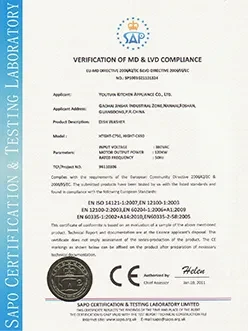
Certificate name
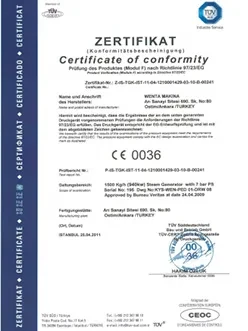
Certificate name
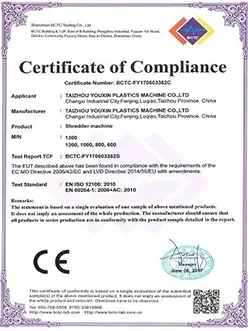
Certificate name
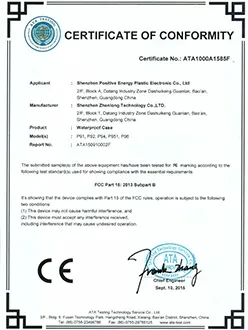
Certificate name

Certificate name

Certificate name
Yes,titanium is a good anode material.


Before choosing materials, let's first understand what anode materials are?
Anode materials have good ionic conductivity and oxidizability, and can lose electrons and undergo oxidation reactions. Common anode materials include metals such as aluminum, titanium, zinc, magnesium, etc., as well as oxides such as titanium dioxide, tin oxide, etc. The selection of anode materials is very important, and different materials have different characteristics and application ranges. Reasonable selection of suitable anode materials can extend the service life of the equipment and improve the efficiency and stability of the equipment.
Why is titanium used as anode?
Titanium is light and corrosion-resistant. Titanium is used as anode with stable dimensions, which reduces power consumption and can increase current density. It has a long working life and high corrosion resistance and is called DSA (dimensionally stable anode) anode or insoluble titanium anode. The base metal titanium can be used repeatedly. So titanium is a good anode material.For more details, please contact my Mail:nicole@jmyunti.com.

Titanium's metallic properties are very stable, so it can be used as a cathode. It is very easy to disperse into ions without chemically reacting with the electrolyte. For example, when electrolyzing water to produce hydrogen, titanium is used as a cathode material to separate hydrogen and oxygen ions in the electrolytic solution.
Titanium as anode has good durability and stability under brine electrolysis conditions

What is the role of titanium anodes in brine electrolysis?
Brine electrolysis requires that the anode material has good point catalytic performance for the precipitation of chlorine, good durability, and the ability to inhibit oxygen precipitation. Titanium, as the substrate of the anode, has good conductivity and corrosion resistance, and has good durability and stability under brine electrolysis conditions.
Electrolysis of salt water is the electrolysis of sodium chloride, which is equivalent to the electrolysis of sodium chloride and water. The reaction at the anode is: Cl ions lose electrons to generate chlorine gas, and the cathode is hydrogen ions that gain electrons to generate hydrogen gas, and then the following reaction occurs; H2O +Cl2=HClO+HCl;
The electrolysis of salt water has relatively high requirements for the anode. First, the metal material cannot contaminate the electrolytic solution, and needs to withstand high current and voltage. It cannot react during the electrolysis process and requires stable metal properties. After repeated testing and application by many domestic manufacturers, titanium anodes coated with ruthenium-iridium mixtures are increasingly used in electrolysis of salt water and seawater chlorine electrolyzers.
Which metal is good for anode?
During the electrolysis or electroplating process, the anode itself does not dissolve and only undergoes oxidation reaction. The materials of insoluble anodes include lead, carbon, platinum, graphite, nickel, stainless steel, titanium-plated platinum, iridium-plated tantalum, ruthenium-plated iridium, rhodium, etc. Insoluble anodes play the role of anode conductivity in the entire electroplating process, releasing oxygen or oxidizing metal ions.
Aluminum anode
Aluminum is a commonly used anode material for electrolytic cells. It has good conductivity and corrosion resistance and is suitable for many electrolytic processes, such as aluminum electrolysis,electroplating, etc.
Platinum anode
Platinum is a precious metal with excellent corrosion resistance and stability. It is often used in electrolytic processes that require high purity and high stability, such as electrolysis of water to produce hydrogen, electrolysis of oxygen, etc.
Titanium anode
Titanium is a lightweight, corrosion-resistant metal, often used in some special electrolytic processes, such as chlor-alkali electrolysis, metal electroplating, etc.


What type of anode is best?
Each type of titanium anode has its own unique advantages and application areas. Different types of titanium anodes have different prices and cost-effectiveness, and which type of titanium anode is best depends on the specific application requirements and budget.
Tantalum-iridium coated titanium anode: oxygen-resistant anode, mainly used in oxygen-release reaction, especially suitable for acidic electrolyte, such as sulfuric acid electrolyte of a certain concentration, can be used for seawater electrolysis, etc.
Ruthenium-iridium-titanium coated titanium anode: This coated anode is used for electrolytes with high hydroxide content, resistant to oxygen corrosion, and suitable for ion membrane electrolysis.
Titanium-based PbO2 anode: This anode is based on titanium mesh, on which β-PbO2 is electroplated. It is characterized by ultra-high oxygen, such as perchlorate electrolysis and sewage treatment.
Tantalum-iridium coated titanium anode
Ruthenium-iridium-titanium coated titanium anode
Titanium-based PbO2 anode

How to choose titanium anode substrate type?
At present, in the design of titanium anodes, there are basically two types of anode substrates: one is titanium plate and the other is titanium mesh.
Titanium mesh is made by punching and stretching titanium plate. Its main advantages are that titanium mesh can only be coated on both sides. Even if it is not facing the back of the product, the back coating can also participate in the discharge because the mesh material is a hollow structure. Therefore, the effective discharge area of the entire mesh anode is larger than that of the titanium plate, which can reduce the current density of the actual anode working conditions. Mesh anodes often have poorer mechanical strength and higher resistivity than plate anodes. In view of the above problems, designing a suitable frame and optimizing the position of the welding points can improve the flatness and discharge uniformity of the titanium mesh anode.
The biggest advantage of using plate anodes is that the substrate of the plate anode can be reused. After the anode coating fails, the residual coating can be stripped off, and the substrate surface can be thoroughly cleaned before re-coating. In this way, in the future application of the anode, the cost of long-term use can be saved to a certain extent (although the one-time investment will be slightly larger). On the other hand, the thickness of the plate anode substrate is usually 2mm and 3mm, while the mesh anode is generally suitable for being drawn from a 1mm titanium plate (hollowed out in the middle), so the conductivity of the plate anode is better than that of the mesh anode. At the same time, the relative mechanical strength of the plate anode is stronger than that of the mesh anode, and the flatness is better. But this does not mean that the discharge uniformity of the plate anode is necessarily better than that of the mesh anode. In comparison, the overall mechanical design of the plate anode is simpler than that of the mesh anode (with a frame), but if it is to meet higher electroplating uniformity requirements, there is still room for optimization in the distribution of the current access points of the plate anode.
We're professional titanium anode manufacturers and suppliers in China, specialized in providing the best customized service with competitive price. We warmly welcome you to buy or wholesale cheap titanium anode for sale here from our factory. For quotation and free sample, contact us now.
Iridium Coating Titanium Anode, titanium anode for electrolysis, Pt Coated Titanium Anodes(0/10)


