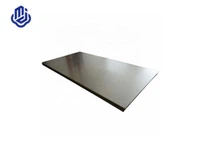
Item: Anode Fruit and Vegetable Disinfecting
Substrate: Titanium (Gr1 TA1)
Coating: Ruthenium/Iridium and other precious metal oxides
Shape: grid, plane, tube, rod... (can be customized)
Manufacturing Process: Nano Coating - High Temperature Sintering
Coating thickness: above 8um
Chlorine evolution potential: <1.13V
Polarizability: ≤40mV
Enhanced life: current density 20KA/m2 time ≥ 60H
Working current density: <750A/m2


Service life of titanium electrode
1 The titanium electrode is the black surface of ruthenium dioxide and iridium dioxide or iridium dioxide and tantalum pentoxide after oxidation and sintering, and the black side corresponds to the cathode; the uncoated surface is blue or gray titanium dioxide surface, this side Does not have electrode performance.
2. Once the titanium electrode substrate is pickled, all subsequent production processes and use must be carried out strictly and carefully. Wear clean gloves during handling, installation and disassembly to get stuck at both ends or edges of the anode, and it is best to touch it without coating. Part of the coating surface is strictly prohibited from scratching by any foreign objects.
Note: The titanium substrate itself is not conductive, and its outer layer is coated with a noble metal oxide coating to have electrocatalytic activity, conductivity, and oxidation resistance, but its thickness
It is only about 10 microns. If it is scratched or damaged, during the electrolysis process, the electrode will not only corrode from the damage, thereby affecting the quality and effect of the entire electrode, and the titanium anode will be greatly reduced due to the instantaneous high current loading. service life.
3 The electrolyte maintains stability, especially can not contain cyanide ions and fluoride ions, these impurities will seriously corrode the titanium substrate.
4. Before the electrolyte enters the electrolytic cell, add a filter device, which cannot contain metal particles with a diameter greater than 0.1 mm, in order to prevent excessive aggregation and lead to short circuit of cathode and anode.
5 When electrolytic recovery of copper, nickel, gold, silver, diamond and other metals, the cathode attachment should not be too thick. When the titanium electrode is initially used, the conductivity is the best, and the copper extraction efficiency is high. Therefore, at the beginning, special attention should be paid to the timing of copper stripping. In order to prevent the electrode spacing from being too small or the formation of metal thorns, the cathode and anode will be short-circuited.
6 The distance between the cathode and anode can be set according to the actual production, generally 3-25mm. Generally speaking, the pole distance will increase the voltage drop, and it should not be too small, otherwise the cathode scale generated on the cathode surface will easily cause the short circuit of the plate, resulting in the anode and cathode. Surface honeycomb galvanic corrosion.
7 Avoid reverse pole use. Precious gold oxide coating - once used as a pseudo-cathode, the surface will undergo a reduction reaction and easily converted into a metal element, and it cannot be effectively combined with the titanium base, causing the coating to fall off; if pure titanium is used as an anode, the surface will undergo a fierce oxidation reaction It will make the titanium material especially easy to be melted.
8. It is not advisable to soak in the solution in the power-off mode for a long time when the machine is shut down. It is better to load a small current of about 5A to protect the plate.
9 During shutdown or other maintenance conditions, add dilute acid or boron water to clean the surface of the electrode, scouring the throat or mechanical substances.
10. The temperature of the electrolyte is not high when it is working. The ideal temperature is 25-40C, and the conditions can be exchanged for heat to maintain the best use environment for the electrode.
11. The normal working current density is less than 2000A/m2, too much sulfhydryl will cause the plate to be too intense and shorten the life of the anode.
12 When starting up, apply current to the electrolytic cell step by step, do not raise it all at once, and the same is true when it is stopped.
13 Keep the anode clean during production and use, and can not be contaminated with oil or other attachments, which will affect the electrolysis effect and the life of the electrode.
14 In the same electrolysis environment, different titanium anodes have different conductivity. The more the amount of metal added, the better the conductivity and catalytic activity of the anode.
In the industrial operation, it is the first use stage of the anode, and the operator is required to be close and master the rules, so as not to cause the occurrence of excessive cathode attachments or rapid growth of the electrode plate. .
15 The anode has life, and ensuring the stability of production is more beneficial to prolong the service life.


Low energy consumption for chlorine evolution potential, uniform coating and long service life.
Typical applications: industrial water treatment, seawater electrolysis, swimming pool disinfection, electrodialysis, chlor-alkali industry, electrolytic chlorine production, electrolytic drinking water, food sterilizer......
Company: Baoji Dynamic Trading Co., Ltd
Country:China
Add:Baoti road,Jintai,Baoji city,Shaanxi,China
Cel:+86 18391896637(WHATSAPP)
Gmail:alisa@jmyunti.com
Website:www.jm-titanium.com
Hot Tags: anode fruit and vegetable disinfecting, China, suppliers, manufacturers, factory, customized, wholesale, buy, price, cheap, sale, quotation, in stock, free sample, Lead Oxide Coated Titanium Anode, Titanium Equipment, Titanium Anode For Swimming Pool Disinfection, Iridium Coating Titanium Anode, titanium anode for electrolysis, Ruthenium Coating Titanium Anode