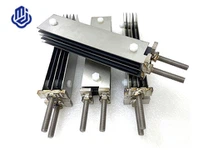
Previously, when glasses were most commonly used, they were said to have a "titanium frame", but now many metal household items have seen the presence of titanium.
Is "titanium" worth buying? After reading this article, I believe you will know the answer.
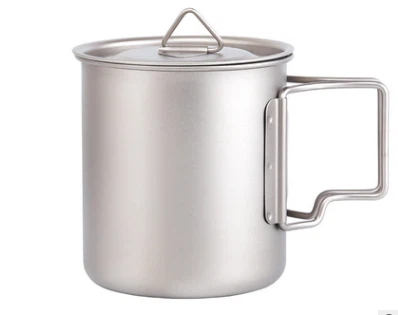
Five basic abilities
When evaluating the quality of all metal products, we must start from their five basic abilities.
① In terms of corrosion resistance, titanium can be said to be superior to stainless steel products. The most common metal with the strongest corrosion resistance in daily life is 316 stainless steel, and titanium has a stronger corrosion resistance than 316.
② Titanium has strong biological affinity, which means it is not easily allergic. Just like how I can't wear a metal strap normally, my wrist will turn red, itchy, and have small bumps. But if we switch to titanium chains, we can use them with confidence.
③ Weight density | We often say 'titanium is lightweight', but in fact, titanium has a low density. A thermos cup made of stainless steel weighs at least three to four hundred grams, but when replaced with titanium, it weighs less than 200 grams, so titanium is very popular for outdoor products.
④ In terms of thermal conductivity, titanium performs poorly, only 1/5 of iron and 1/14 of aluminum. However, from another perspective, poor thermal conductivity means strong insulation ability, so it is not entirely a bad thing.
⑤ Strength and hardness 丨 This needs to be expanded upon--
After browsing through a lot of information, some people say 'titanium has high strength', while others say 'titanium is very soft'. My personal experience made me more inclined towards the latter, and of course, I later learned the reason.
The strength to weight ratio of titanium is very high, which means that compared to stainless steel of the same weight (let's use this as a comparison), titanium has greater strength. But we buy titanium products just to be lightweight, so as the weight of titanium decreases, its hardness naturally decreases.
Correct application direction
At present, there are many household titanium products, but not every type of titanium product is easy to use.
① Insulation 丨 This is highly recommended, such as pure titanium insulated cups. I also have a pure titanium insulated cup myself, which has slightly better insulation and cooling effect than stainless steel material (but only slightly better, because its weight is not enough).
② Corrosion resistance is still highly recommended, as titanium's corrosion resistance is even stronger than ceramics. So water bottles often used to hold beverages and dairy products can also be made of pure titanium material.
③ Lightweight 丨 For outdoor enthusiasts, don't miss out on titanium, which is lightweight and can reduce a lot of weight for you. I don't like outdoor activities, but I usually carry a pure titanium thermos when going out, and I also think it's very lightweight.
④ Hardness | I have also seen some kitchen utensils such as knives, spoons, chopsticks, etc. using pure titanium material, which is not recommended. Because pure titanium is too soft, the edges and blades of kitchen knives and spoons will quickly curl up.
⑤ Pot utensils | Titanium pots need to be specifically mentioned - if used outdoors, they can be chosen to reduce weight. If it is for household use, forget about it. Titanium pots have a slow heating rate, uneven temperature, and are prone to sticking the bottom and uneven heating, making cooking less delicious.herefore, for most household titanium products, their hardness is relatively low and they are more prone to scratches and bumps than stainless steel.
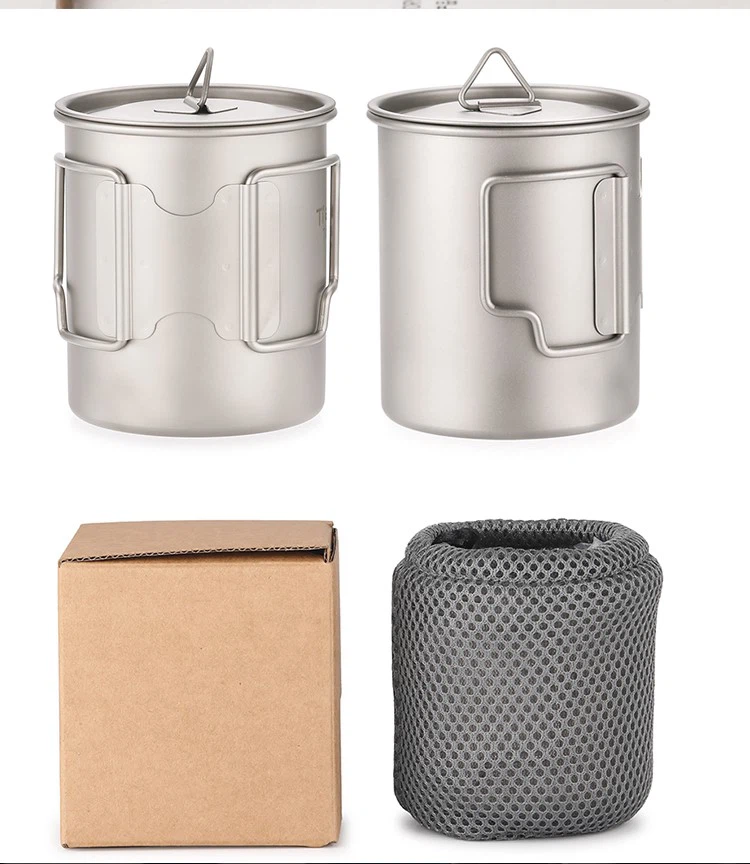
Choosing is important
The current standards for titanium products are not very perfect, and many businesses like to play word games and accidentally pay intelligence taxes.
① Pay attention to the content of "titanium". Some products may directly label the content, such as "≥ 99%". Some are not labeled, but it's okay as long as the packaging indicates the implementation of the national standard (GB/T3620.1-2016 "Titanium and Titanium Alloy Grades and Chemical Composition") and states that it is "pure titanium".
② Some titanium products are "containing titanium" 丨 these two words have rich meanings, but we don't know exactly how much they contain. I once bought a non stick pan that claimed to have a coating containing titanium (and specifically said it was "pure titanium"), and it worked no different from a regular non stick pan.
③ There is a material called 'titanium steel', which is another name for 316L stainless steel and has nothing to do with titanium. Don't be fooled. 316L, as I mentioned in my previous article, is not better than 316 stainless steel for home users
Country:China
Add:Baoti road,Jintai,Baoji city,Shaanxi,China
Cel/Whatsapp :+86 18309262795
Email:annie@jmyunti.com
Website:www.jm-titanium.com