According to Pacific Securities information, the export volume of domestic titanium dioxide is continuously increasing. In 2023, the domestic export volume of titanium dioxide soared to 1.64 million tons, setting a new historical record. In 2024, the export orders of domestic titanium dioxide enterprises will still remain high, and since the beginning of this year, they have experienced three price increases.
According to incomplete statistics, from January to March 2024, China's cumulative export volume of titanium dioxide reached 489500 tons, an increase of 11.99% year-on-year. In March, the monthly average export price of titanium dioxide was 2264.56 US dollars per ton, an increase of 2.65% compared to the previous month. From January to March 2024, China's titanium ore exports totaled 15000 tons, an increase of 39.24% year-on-year, with an increase of approximately 4328 tons in export volume.
Due to the impact of environmental regulations and production costs in the European region, the market competitiveness of local titanium dioxide producers has weakened, leading to the withdrawal of some production capacity from Kemu and PanNengtou. This has provided more overseas expansion opportunities for Chinese enterprises, resulting in the continuous expansion of China's titanium dioxide production capacity in the global market share.
New technology 3D printing
The use of titanium alloys by 3C manufacturers has brought new changes to the processing technology of titanium alloys. In the field of consumer electronics manufacturing, metal powder 3D printing technology is gradually becoming the mainstream trend, and 3D materials will become a new growth point for titanium materials.

The titanium industry mainly includes four stages:
① Raw material refining: Prepare titanium ore into sponge titanium and titanium dioxide with a purity (mass) of 99.1% to 99.7%
② Ingot preparation: Producing titanium ingots by melting qualified sponge titanium, or preparing titanium alloy ingots by adding specific intermediate alloys, and processing the ingots to form titanium and titanium alloy billets.
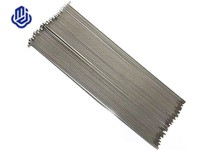
③ Morphological processing: Based on the customized requirements of different customers and specific application fields, various specifications and shapes of titanium products such as bars, plates, pipes, wires, etc. are produced through deformation treatment, heat treatment, and mechanical processing using forging, rolling, extrusion, drawing and other processes.
④ Deep manufacturing: In specific industries and industrial product fields, titanium materials are further processed into various precision titanium parts and equipment through deep processing technology.
The process used by 3C giants for titanium alloy products is to convert the third stage titanium products into metal powder, which is then combined with 3D printing technology to produce specific products.
Due to the low thermal conductivity of titanium alloy, it is easy to cause rapid local temperature rise and difficult to release heat during traditional cutting processes, which makes it difficult to process using traditional subtractive manufacturing methods. As an additive manufacturing technology, 3D printing can effectively avoid these problems, especially suitable for processing components with complex internal structures, and has advantages such as high raw material utilization, low cost, and high yield rate.
At present, 3D metal printing is mainly used for the processing of mobile phone structural components. For example, the Honor folding screen mobile phone Magic V2 uses titanium alloy 3D printing technology on the hinge cover of its folding screen, which is the first large-scale use of 3D printing titanium alloy technology on mobile phones.
It is worth noting that 3D printing may cause some problems in the process of forming metal powders and particles in one go, such as gaps and crevices, which result in lower stability of the product compared to products formed by forging or casting, making it difficult to apply in some industrial fields. This is also why many titanium companies have not widely adopted this technology.
With the continuous maturity of titanium alloy 3D printing technology, the overall industry chain scale will gradually expand. It may only be a matter of time before occupying new market share in the consumer electronics industry. In addition, the popularization of titanium alloy 3D printing technology in the 3C industry is expected to promote innovation and application of key materials for electronic products, improve manufacturing efficiency, optimize supply chains, and thereby stimulate the potential for joint innovation in the industry chain.
Country:China
Add:Baoti road,Jintai,Baoji city,Shaanxi,China
Cel/Whatsapp :+86 18309262795
Email:annie@jmyunti.com
Website:www.jm-titanium.com