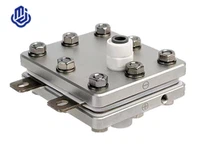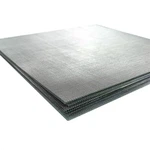

Products Description
The circulating water electrochemical water treatment technology is a multidisciplinary integrated technology that utilizes the complex electrical, chemical, and physical reactions at the interface between the electrode and water to produce a main reaction that is beneficial to the water treatment needs and inhibit the side reaction at the anode interface and cathode interface. This requires proficiency in water, electricity, and electrochemistry, and is a comprehensive application of multiple disciplines.
First, we analyze where the technical difficulties are.
------Electrochemistry needs to consider the anode material, the reaction rate at the interface with water, the main reaction and side reaction, the kinetics of the reaction, the factors affecting the reaction, etc., which covers a wide range.
The electrode material is higher than that required for ordinary electrolytic reactions; the design of the electrolytic device is more complicated, and its efficiency is determined by many factors.
-----The anode material is very critical. It not only provides current for the cathode, but also solves the problem of damage and corrosion caused by impurities in the water, and solves the problem of bacteria and slime. The electrolytic device used in the chlor-alkali industry and other industries has strict requirements for the electrolyte, and the impurities are relatively few, while the impurities in the circulating water are very many, and with the need for zero emissions, the impurities are more complex and the concentration is higher, which causes more serious damage to the electrolytic coating.
----Relationship between impurities in water and electrode coating: fluoride ions, chloride ions, conductivity, organic matter, cyanide, turbidity, hardness, pH, oil, etc. in water will damage the electrode
------For reclaimed water as replenishment, it must have the ability to reduce turbidity and COD, so the technical requirements are very high. Chlorine-producing electrodes, such as titanium iridium ruthenium and titanium iridium electrodes, produce chlorine gas by electrolysis of chloride ions. Part of the chlorine gas overflows and part of it becomes hypochlorous acid. These substances have very limited ability to control bacteria, degrade COD, and reduce turbidity. It is necessary to explore new ways to solve the problem.
----Several indicators for evaluating the efficiency of electrolysis devices: reaction speed, current efficiency, energy consumption, technical stability, technical comprehensiveness, anode life, anode replacement cost, technical risks, etc., involving multiple disciplines such as materials science, fluid mechanics, electricity, electrochemistry, and mechanics. It is a complex technical design, and its scientific nature directly determines the descaling efficiency.


Product Display
How does water scale harmful to equipment?
Water scale mainly consists of carbonate, magnesium, occupy 60%. Other kind scale includes sulfate, silicate, iron, occupy around 10%. Dust sludge around 30%. Scale largely reduces heat-exchange and reaction efficiency, which largely increase power consumption. Take center air-conditioning as example. Once scale 0.3mm forms at heat ex changer will cause 20% heat loss, increase 10% energy consumption.
Introduction to the principles and technical advantages of electrochemical water treatment systems:
The electrochemical water treatment system is a new environmentally friendly technology developed based on the electrochemical electrolysis principle and polar water molecule theory. It has the functions of descaling, anti-scaling, sterilization, algae removal, and corrosion inhibition. It can also dissolve the solid scale in the water circulation pipeline, reduce the concentration of salt ions, degrade organic matter, save water, save energy and pollution-free. It is the mainstream treatment method for circulating water treatment in the future.
The principle of the electrochemical water treatment system is: under the action of direct current, the positive and negative ions in the aqueous solution between the positive and negative plates move to the plates with opposite polarity, and an electron gain and loss reaction (i.e., discharge reaction) occurs. The anode produces an oxidation reaction to produce strong oxidizing substances such as OH-, O3, and H2O2, which have the effects of descaling, algae removal, sterilization, and corrosion prevention. The cathode produces a reduction reaction to reduce Ca2+ and Mg2+, produce precipitation on the cathode plate, and then remove it from the system, reduce the salt content and hardness of the system, and increase the concentration multiple. Since no chemicals are added during operation, the discharged sewage has no other pollution except for a slightly higher salt content, and is very easy to handle.
Electrochemical descaling is a major innovation in cooling water treatment technology
● Environmental protection It can absorb and remove scale, sterilize and remove algae, and soften water without using any chemicals. It is a completely pure physical treatment without any pollution.
● High efficiency It is a truly direct and effective physical water treatment method, and the descaling effect is intuitively visible.
● Energy saving It can effectively improve the overall efficiency of the system by 5-25% and save 5-25% of energy consumption.
● Water saving It can greatly reduce the amount of sewage discharged, saving more than 90% of water compared with the current industry water treatment method.
● Intelligence It is unattended all day long, and the management is convenient and simple, and it can be adjusted adaptively with changes in water quality.
● Convenience This product adopts bypass installation, and there is no need to make any changes to the user pipeline, which is extremely convenient to use.


The electrolysis principle of ruthenium iridium titanium anode is mainly based on electrochemical reactions, and the process involves multiple key steps and characteristics. The following is a detailed explanation of the electrolysis principle of ruthenium iridium titanium anode:
Overview of electrolysis principle:
Electrolysis is the process of converting electrical energy into chemical energy, which usually occurs in an electrolytic cell or electrolytic tank.
During the electrolysis process, an electric current (external direct current) passes through the electrolyte solution, causing redox reactions at the positive and negative electrodes.
Composition and characteristics of ruthenium iridium titanium anode:
Ruthenium iridium titanium anode is mainly composed of ruthenium (Ru), iridium (Ir) and titanium (Ti), among which ruthenium and iridium provide excellent corrosion resistance, while titanium provides strength and conductivity.
This anode material can maintain long-term stable operation in various chemical environments, including acidic, alkaline and oxidizing environments.
Main reactions in the electrolysis process:
Oxidation reaction: At the anode, the oxidation reaction of water usually occurs, and the specific reaction is: 4OH−→O2+2H2O+4e−. This is a typical water oxidation reaction, in which hydroxide ions (OH^-) are oxidized at the anode to produce oxygen (O2) and water (H2O).
Anodic reaction: The ruthenium-iridium alloy on the titanium substrate provides electrical conductivity and corrosion resistance, allowing the oxidation reaction to proceed efficiently. The high corrosion resistance of the ruthenium-iridium alloy stems from the stability of these two metals to a variety of chemical environments.
Current transfer and energy conversion:
During the electrolysis process, the current passes through the ruthenium-iridium-titanium anode, transporting electrons to water molecules, prompting the oxidation reaction of water to occur.
The key role of the ruthenium-iridium-titanium anode in these reactions is to provide a stable and conductive surface while maintaining resistance to corrosion.
Electrolysis efficiency and characteristics:
Due to the low resistance characteristics of the ruthenium-iridium-titanium anode, it can provide lower energy consumption during the electrolysis process, thereby improving the electrolysis efficiency.
In addition, the ruthenium-iridium-titanium anode has a high reaction rate, which can complete the electrolysis process in a short time and improve production efficiency.
Product Application
1. In the field of industrial circulating water treatment, such as power plants, steel plants, cement plants, petrochemicals, electric power, pharmaceuticals, food, paper printing, metallurgy, coal mining, machining, manufacturing, industrial air compressor stations, heating systems, etc. Circulating water system scaling, rust, algae and fungi, etc.;
2. Central air-conditioning circulating cooling water treatment to solve problems such as scaling, sludge deposition, bacteria and algae; such as factories, hotels, shopping malls, office buildings, office buildings, etc.;
3. Aquaculture and aquatic seedlings are used for water purification;
4. The sewage treatment plant can improve the sedimentation speed of the sludge in the sedimentation tank, make the water quality clear, reduce the treatment cost, and at the same time can absorb some metal ions in the water.

Product Process
Titanium anode is a kind of electro-catalysis electrode in electro-chemistry, which is composed by substrate that is pure titanium and coated that is precious metal oxide.
Three Procedures:
1. Substrate treatment: it needs to be treated by roughing, cleaning and removing oil, which can increase the compactness of catalytic.
2. Brushing
Drying
After substrate treatment, it will be proceeded brush coated. The main coated content is platinum group metal, which is a kind of mixed solution.
Then, heat treatment will be going on after drying.
The whole procedure need to be repeated many times. This method is better to form thin oxide catalytic that is lamellar adhere to substrate surface.
Product Parameter
| Power (V) | 30V±5% |
| Working voltage | 5V-20V |
| Rated current | 20A |
| Working current | 10A |
| Ambient temperature | ≤45℃ |
| Processing capacity | 10T/D |
| Appearance size | Φ136×700 |
| Cable | 3×6mm2 |

Product Installation
Electrode bar should immerse in water
Keep control box as near electrode as possible, rain proof.
Don't shut on/off frequently after connecting wire.
Close power supply before clean electrode
Clean electrode:
Disassemble 3 pieces screw and bolts
Take off both ends cover
Separate negative and positive electrode
Use nitrohydrochloric acid to clean electrodes 2-3minutes, wash with clean water till clean
Fix electrode at cooling tower for work
Wear protection glass, anti acid gloves when cleaning electrodes. Ask help for doctor if acid liquid touches skin.
More Anode


Product Packaging
PackPacking details: provide waterproof, plastic film packing in pallet or wooden case.Prevent any damages to the product during transportation. We accept custom package, please contact us if you want custom package.
ing details: provide waterproof, plastic film packing in pallet or wooden case.Prevent any damages to the product during transportation. We accept custom package, please contact us if you want custom package.


Contact Us
The product can be customized according to your requirement, Welcome to contact us!
Company: Baoji Dynamic Trading Co., Ltd
Country:China
Add:Baoti road,Jintai,Baoji city,Shaanxi,China
Cel:+86 18391896637(WHATSAPP)
Gmail:alisa@jmyunti.com
Website:www.jm-titanium.com
Hot Tags: titanium anodes for circulating water treatment, China, suppliers, manufacturers, factory, customized, wholesale, buy, price, cheap, sale, quotation, in stock, free sample, titanium bowl, titanium screw DIN912, nylon lock titanium nut, titanium tubes for tubular heat exchangers, Titanium heat exchanger swimming pot, titanium alloy pipe coil