


Products Description

1,Select TA1 titanium substrate (contained iron and oxygen is lower than TA2 , with high purity,and better electrode effect), make sure that the surface of the plate is smooth and flat, with no deep scratches or defects.
2,Mechanically process the titanium substrate , fold the edges, thread, weld and form, process into the required specificationsand dimensions of the customer, and ensure within the tolerance range.
3,The titanium substrate is annealed and leveled at a temperature of greater than 500°C to relieve stress and ensure flatness.
4,During annealing and leveling, a dense titanium oxide layer is formed on the surface of the titanium substrate. This layer isthen polished mechanically or artificially to make the surface of titanium have a metallic luster .
5,The substrate was pickled and corroded with 10% oxalic acid and heated in a slight boil for several hours, to make the surface of oxide layer etch hydride surface , the roughness of surface is 5 microns.
6,According to the anode application environment of customer's requirements,configurate qualitative and quantitative preciousmetal solution.
7,Detecting the pickled titanium substrate is qualified, that is, the surface layer is a gray uniform structure, then coating
artificially and sintering according to the set suitable temperature. After sintering, turning to cool naturally, and make the
second coating when cooling to normal temperature, repeating this process more than 12 to 20 times to finish coating the
configuration solution.
8,After the above process finished, make the furnace test to test the life of the products, packaging and delivering after the test qualified.
| Substrate Material | Titanium Grade 1 or Titanium Grade 2 |
| Surface material | Ruthenium and Iridium,platinum,PbO2, MMO |
| Specification | As per the customer's drawing |
| Working Parameter | Current density<2000A/M2; Temperature≤60°C; Salt water electrolyte |
| Coating thickness | 8-10um |
Products display

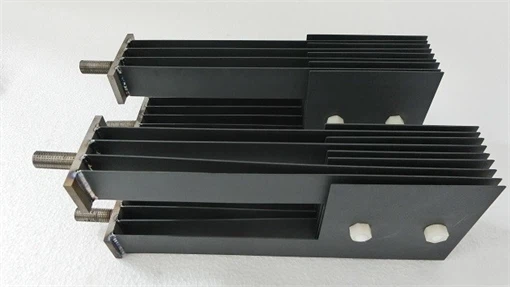


Titanium Anode Knowledge
Iridium tantalum (Ir Ta) coated electrode
Oxygen resistant electrodes are mainly used for oxygen evolution reactions, especially suitable for acidic electrolytes such as sulfuric acid electrolytes with a certain concentration. They have ultra-low oxygen and can be used for oxygen evolution electrolysis. They are also resistant to chlorine corrosion and can be used for both oxygen and chlorine evolution electrolysis, such as seawater electrolysis. They are electrode materials that are relatively good for oxygen evolution reactions in acidic media, and the available electrode materials are limited in such environments. This coated electrode has been applied in organic electrolysis, such as cysteine, acetaldehyde, succinic acid, etc. It can be used for indirect oxidation of Cr3+→ Cr6+in organic electrolysis, and for the oxidation of organic and toxic substances in water, such as CN, in wastewater treatment. It can also be used as an auxiliary electrode in the electroplating industry, such as an auxiliary anode for Cr plating, an auxiliary anode for copper electrolysis, an auxiliary anode for zinc electrolysis, and an auxiliary anode for cathodic protection.
1, Ru Ti Ir ternary coating electrode
This coated electrode is used in electrolytes with high hydroxide ions, resistant to oxygen corrosion, and suitable for ion membrane electrolysis.
Coating indicators:
1. The discharge potential is 1.18 volts (S.C.E) at a current density of 4000A/m2.
2. Enhanced lifespan (coating weight loss method) of 1.02mv/4 hours · cm2, with a guaranteed service life of over 5 years, has been applied in industrial large electrical tanks
2, Ru Ti Sn ternary coating electrode
The technology has been successfully developed and has won the Science and Technology Progress Award from the Ministry of Chemical Industry. The coating features:
1. The chlorine evolution potential is low and the overpotential is small. At a current density of 2000A/m2, the chlorine gas discharge potential is not greater than 1.12V and the overpotential is less than 20mv
2. Polarization rate is less than 30mv/10 unit current density.
3. Enhanced lifespan of 0.5N H2SO4, current density of 1A/cm2, with a lifespan greater than 1500 minutes.
The above three indicators are all better than the industry standard indicators (industry indicators are: potential 1.13 volts, polarization rate 40mv/10 unit current density, and enhanced lifespan greater than 1000 minutes) This coating has been widely used in the chlor alkali industry, with an actual service life of up to 8 years.
3, Titanium Platinum (Ti/Pt) Coated Electrodes
Base metal: Gr1, Gr2, TA1, TA2
Working current range:<2000A/m2
Temperature range:<80 ℃
Coating metal: Pt (99.99%)
Shape: plate-like, tubular, etc
Technical features: It is an insoluble anode, and the platinum coating is firmly bonded to the titanium based substrate, with stable performance. It can replace pure gold and pure platinum anodes, and is used in gold and other precious metal plating tanks.
Application: seawater, horizontal electroplating, pulse electroplating, cathodic protection, acidic and alkaline electroplating solutions
Company profile
Pre-sale Service
1. Sample can be offered with sample charge and courier fee by buyer's side.
2. We have full stock,and can deliver within short time.Many styles for your choices.
3. OEM and ODM are available.
4. Good Quality + Factory Price + Quick Response + Reliable Service, is what we are trying best to offer you
5. We have 13 year experience of design, manufacture and sell , we appriciate each order .
After you order
1. We will figure out best delivery cost and make invoice to you immediately.
2. Recheck products, then send out to you at 1-2 working day after payment received,
3. Tracking no will send to every clients, and help to chase the parcels until arrived.
After-sale service
1. Glad to get suggestions for price and products from clients.
2. Any question,please contact let me know by E-mail or Telephone.
Chlorine alkali industry: The use of titanium anodes can improve the purity of chlorine gas, reduce carbon dioxide emissions, and save energy consumption.
Electroplating: As an anode in the electrolysis process, it is used to deposit metals such as chromium, copper, nickel, and zinc.

Chemical pharmaceuticals: used for the preparation of various organic compounds and pharmaceutical intermediates.
Acid base electrolysis: replacing traditional lead and platinum electrodes in electrolyzing solutions such as hydrochloric acid, sulfuric acid, and hydrofluoric acid.
Application
MMO anode, as an efficient and reliable material, has a wide range of application scenarios. The following are several main application areas:
In marine engineering, MMO anodes are often used for cathodic protection of submarine pipelines. Due to the highly corrosive nature of marine environments, traditional cathodic protection materials often struggle to withstand prolonged corrosion. MMO anode, with its excellent corrosion resistance, high efficiency, and long lifespan, has become an ideal choice for cathodic protection in marine engineering.
In the field of petrochemicals, MMO anodes also play an important role. The anti-corrosion protection of equipment such as oil and gas pipelines and storage tanks is an important task in the petrochemical industry. MMO anodes are widely used for cathodic protection of these devices due to their efficient and stable electrochemical performance, effectively extending their service life.
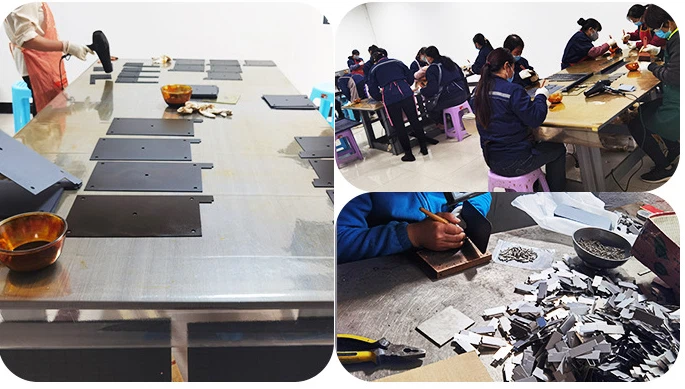
Production process

Contact information
Country:China
Add:Baoti road,Jintai,Baoji city,Shaanxi,China
Cel/Whatsapp :+86 18309262795
Email:annie@jmyunti.com
Website:www.jm-titanium.com
Hot Tags: titanium anode with mmo ru-ir coating electrode, China, suppliers, manufacturers, factory, customized, wholesale, buy, price, cheap, sale, quotation, in stock, free sample, pure titanium hexagon domed cap nuts, ANSI 18.2.1 titanium screw, titanium screw DIN933, titanium flange bolt, pure titanium pipe coil, titanium hexagon socket set bolt


