

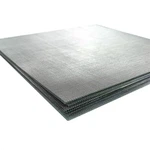

Products Description

Ruthenium-iridium-titanium electrode plates have been widely used in electroplating, electrochemistry and other fields. Its principle is based on the reduction reaction of electrochemical oxidation. Under the action of electric current, calcium ions and magnesium ions in water will transfer to the cathode area to form calcium carbide and magnesium hydroxide, thereby reducing the hardness of water. At the same time, ruthenium-iridium electrodes also generate strong oxidants, which effectively inhibit the growth of fungi and algae in the cooling circulating water system, achieving the functions of sterilization and algae removal.
| Product Name | Titanium RU-IR anode sheet for water treatment |
| Substrate | Titanium Grade 1, Titanium Grade 2 |
| Coating |
1. Ruthenium-Titanium Anode 2. Ruthenium-Iridium Titanium Anode 3. Iridium-Tantalum Titanium Anode 4. Iridium-Tantalum-Tin Titanium Anode 5. Iridium-Platinum Titanium Anode 6. Platinum Titanium Anode 7. Lead dioxide Titanium Anode |
| Coating Thickness | 6~12micron--Mixed precious metal oxide coating 0.5~5micron--Platinum coating |
| Current density | < 20000 A/M2 |
| PH value | 1-14 |
| Content of Florin Ions | <50mg/L |
| Delivery time | Small batch 10-100 pieces production time 7-10 days or so The production time for large orders of 100-1000 pieces is about 15-25 days |
| Packing method | Packing in cartons or wooden cases |
Product display


Product application


Process of using ruthenium iridium titanium electrode plate
a. a. Preparation: Make sure there are no impurities in the electrolytic cell. Install the ruthenium-iridium-titanium anode plate in the electrolytic cell, and ensure that the electrode plate and the electrolyte are in full contact.
b. Connect power supply: Connect the ruthenium iridium titanium electrode to the electrode port of the power supply or electrolysis equipment. Ensure proper connection and follow the operating instructions of the device.
c. Control conditions: We can set current density, time and temperature according to our needs.
d. Start the electrolysis process: turn on the power supply and calculate the required time according to your needs
e. Monitoring: During the electrolysis process, you can record parameters such as current and potential, and then make adjustments and controls according to your needs

Related products


Product advantage
Advantage

Complete specifications
The factory has enough stock, complete specifications for you to choose

Quality assurance
Ensure that products meet
customer requirements for
surface, density, flatness,
roughness and other
performance requirements

Support customization
Can be customized according
to customer needs

Product surface
Smooth products,
no burrs, meticulous
process
Company profile
Our company supplies aluminum foil formed anode plate materials according to the specific requirements of customers. We use industrial pure titanium TA1 as the titanium anode substrate, and the coating system is an iridium-tantalum system mixed precious metal oxide coating. The titanium anode coating has an enhanced life of 21 days measured in the laboratory (based on many years of practical application and experience, our company has measured in the laboratory that the normal service life of 18 months corresponds to an enhanced life of 18 days; the laboratory test medium is 10% ammonium adipate solution, the enhanced current density is 4000A/㎡, and the test conditions are strictly in accordance with Q/YLD-JZ-01-2010 standard).
7x24 hours delivery
Located in 27 cities around the world,with 50 delivery centers,providing 200+ languages,7x24 hours delivery capacity,is the best partner for enterprise globalization


Titanium anode and titanium electrode for electrolytic sterilization technology of water
Electrolytic sterilization can be divided into two types: indirect sterilization and direct sterilization:
1, Indirect sterilization: using electrolysis to produce C10 Hcl03,H202,02, Substances such as 0H kill microorganisms
Extinguish. The existing commercialized disinfection processors mostly produce chlorine dioxide after adding electrolytes such as sodium chloride and disinfectants such as sodium hypochlorite.
2, Direct sterilization: Direct sterilization is the use of electrolytic electrodes to directly act on microorganisms, causing them to die.
Mechanism of electrolytic sterilization and disinfection:
(1) Electrolysis of chlorine containing water produces C10 and a small amount of higher valence chlorate. The reaction on the electrode is as follows, positive
Pole: 2C1-2e → Clz, Cl2+H0 → HC10+H "+C1, 0H ions diffuse into the liquid layer around the anode and neutralize the secondary ions
Chloric acid reacts to produce C10, and further reacts to produce chloric acid: 12C10-+6H20-12e → 4HCl0+8HC1+302. The HC10 and HC103 produced are strong oxidants with strong bactericidal effects on microorganisms.
(2) When electrolyzing water without chloride ions, if the raw water does not contain C1, it also has a good bactericidal effect, indicating that other oxidizing substances besides HOC1 are produced during electrolysis. After analysis, the following reactions exist on the anode side:
① HO → H °+0H
② 20H-2e → (0)+H2O → H202
③ 40H-4e → 2H20+02
④ (0)+02 → 03
Therefore, strong oxidizing disinfectants such as H202, 03, and (0) are produced, which make the treated water electrolyzed and have a strong bactericidal effect.
(3) Electrolysis directly acts on bacterial cell bodies, damaging a bacterial organelle and causing bacterial death. The modern view of chlorine sterilization is mainly through HC10. When HC10 molecules reach the interior of bacteria, they can oxidize and destroy the bacterial enzyme system, causing bacterial death. The oxidized products are Co2 and H2o
Therefore, even with continuous use of chlorine, it will not cause bacteria to develop drug resistance.
Several sterilization methods:
| Disinfection method | effect | Side effect | There is no harm to human body in excess | Durability of disinfection | Degree of convenience |
| Electrolytic sterilization | good | No side effects | no | persistent | Automatic sterilization |
| Chlorine dioxide | good | No side effects | Minimal hazard | persistent | Salt should be added regularly |
| chlorine | preferably | Large and dangerous to operate | Greater harm | persistent | Need regular ventilation |
| ozone | good | Minimal hazard | Do great harm | nonpersistence | Automatic sterilization |
| Ultraviolet light | preferably | No side effects | no | nonpersistence | Need to change the lamp regularly |
| Sodium hypochlorite | preferably | Minor hazard | Minor hazard | nonpersistence | Automatic sterilization |
Advantages of titanium anode:
1. During the electrolysis process, the distance between the titanium electrodes should not change, ensuring operation at a stable voltage.
2. Titanium anodes have a long working life. In the production of chlor alkali industry by diaphragm method, metal anodes are resistant to corrosion by chlorine and alkali.
3. The working voltage is low, so the energy consumption is small, which can save energy consumption. The DC power consumption can be reduced by 10% to 20%. If the titanium anode is working at low voltage reasons:
1) The overpotential of chlorine and oxygen on the active coated titanium anode is relatively low. When producing chlor alkali through saltwater electrolysis, the titanium anode has a low overpotential for chlorine, which is 140mV lower than that of graphite anode at 1A/cm2;
2) It can reduce the "bubble shielding effect". The bubbles generated on the surface of the metal anode are relatively small and detach quickly, which greatly reduces the inflation between the electrodes. The ohmic drop between the two poles is about 700mV, and the bubble diameter is about 3mm;
3) The resistivity of the titanium anode is reduced
4) Shortened the distance between poles.
Packaging and transportation

Samples are generally shipped within 2-3 days of the factory's spot size
Large quantities of goods vary in time according to different vehicles.

contact information
Country:China
Add:Baoti road,Jintai,Baoji city,Shaanxi,China
Cel/Whatsapp :+86 18309262795
Email:annie@jmyunti.com
Website:www.jm-titanium.com
Hot Tags: ruthenium-iridium titanium electrode plate, China, suppliers, manufacturers, factory, customized, wholesale, buy, price, cheap, sale, quotation, in stock, free sample, ti in the periodic table, hexagon socket set titanium bolt with flat point, pure titanium tube coil, titanium sheet ASTM B 265, DIN127 titanium washer, titanium wheel lug nuts


