
How to choose the right platinum titanium electrode?
Gmail:alisa@jmyunti.com
Platinum titanium electrode purchase guide: How to choose the "star material" in industrial applications?
In many industrial fields such as electroplating, electrolytic treatment and seawater desalination, there is a "star material" that must be mentioned, that is, platinum titanium electrode (titanium anode). It has excellent conductivity, strong corrosion resistance, and long working life.
But there are too many types of platinum titanium anode products on the market, so how can you choose the platinum titanium electrode (titanium anode) that suits you? Today, let's talk about the key points of purchase from the aspects of performance parameters, application scenarios, and process requirements.
Choose according to application requirements
(I) Medium situation
Applicable medium
Platinum titanium electrodes can work well in seawater, potassium cyanide solution, and acidic or alkaline media.
Media to avoid
However, if the environment contains fluoride ions or phosphate ions, this will not work. Just like acidic foods corrode teeth, such media will corrode the titanium matrix and eventually cause the coating to fall off. For example, when electroplating precious metals such as gold and rhodium, it is important to ensure that there are no fluorine impurities in the plating solution.
(ii) Current density
The size of the working current is particular and must be controlled within a safe range. Otherwise, just like a balloon will burst if it is blown too much, too much current may break through the titanium substrate.
(iii) Temperature requirements
The working temperature of the electrode cannot be too high, otherwise, the coating will accelerate the loss like ice cream exposed to the sun.
The thickness of the platinum layer and the type of process are very important

Platinum layer thickness, plating process
(i) Platinum layer thickness
The relationship between thickness and cost life
The thickness of the platinum layer must be considered comprehensively in terms of cost and service life. Just like building a house, the thicker and stronger the foundation, the more expensive it is. The thicker the platinum layer, the stronger its corrosion resistance, but the cost will also increase.
Examples of applicable scenarios with different thicknesses
For example, some large industrial equipment with extremely high requirements for equipment durability and sufficient budget may require a thicker platinum layer; while for equipment that is more cost-sensitive and not used very frequently, choosing a platinum layer of appropriate thickness can both meet the needs and control costs.
(II) Plating process
Two main process characteristics
Titanium-based platinum plating process: Under this process, the electrode surface is a pure platinum plating layer with a very tight structure, uniform conductivity, and low resistivity. It is like putting a layer of high-end customized precision protective clothing on the car engine. This process is very suitable for electroplating such as jewelry and electronic components that require extremely high precision.
Titanium-based platinum coating process: Its coating is sintered by platinum compounds, with a relatively high resistivity and a relatively low cost, but the life span will be shorter. Just like clothes made of ordinary fabrics, although cheap, they may break after wearing for a long time.
Selection suggestions
If it is in a scenario with high precision requirements, then the platinum plating process must be selected; if it is an ordinary industrial application, the platinum coating process can be considered.
Electrode structure and installation considerations
(I) Electrode form
Choose the shape according to the scenario
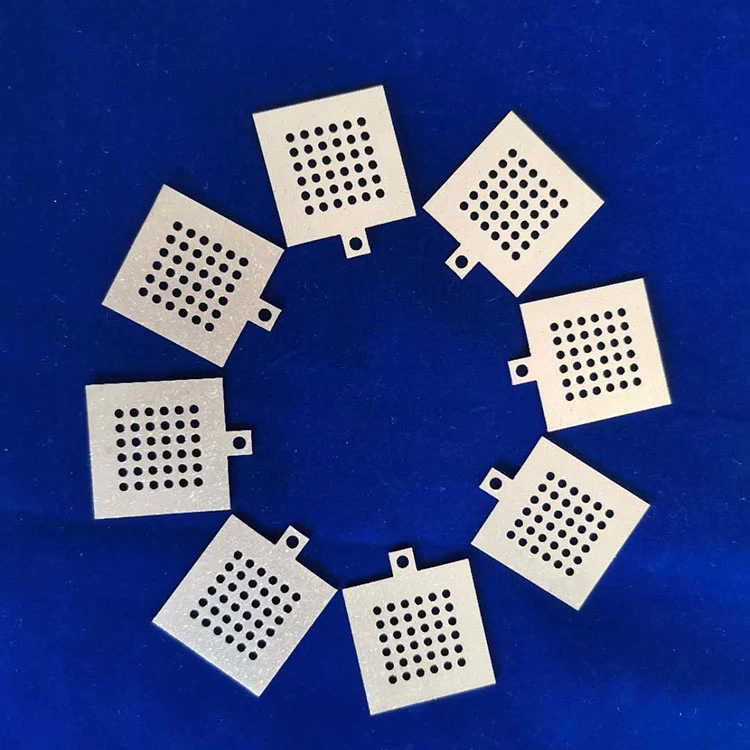
Electrodes have different shapes, such as plate, mesh, tube or rod. These shapes are like different tools, each with its own uses. Mesh electrodes are often used in electroplating and electrolysis reactions because of their large contact area and even current distribution.
(II) Anode-Cathode Area Ratio
The importance of a reasonable ratio
There is one thing to note here, that is, the cathode surface area must be smaller than the anode effective area. If you don't pay attention to this, it will be like a balance that is unbalanced, which can easily lead to anode breakdown.
(III) Installation and maintenance
Correct installation operation
Don't bend or bump the electrode during installation, otherwise the platinum layer will easily fall off, just like accidentally breaking a beautiful ceramic vase. And when it is shut down, it should be cleaned with deionized water and then soaked and stored. It cannot be soaked in tap water for a long time. Tap water has too much calcium and magnesium ions, which can easily cause scale.
Recommendations for different application scenarios
(I) Precious metal electroplating
Applicable cases for electroplating precious metals such as gold and rhodium
If you are plating gold on jewelry or electronic components, you have to choose a high-purity platinum-plated electrode to ensure that the coating is uniform and shiny, just like putting makeup on a little girl, you have to use the best cosmetics to achieve the most beautiful effect.
(II) Sewage treatment
The role in organic wastewater treatment
In terms of sewage treatment, platinum-titanium electrodes are very useful. It can use its high oxygen evolution overpotential characteristics to efficiently degrade organic matter. There are a lot of organic matter in printing and dyeing wastewater and pharmaceutical wastewater, so it is just right to use it to treat it.
(III) Seawater electrolysis
Electrode selection for seawater electrolysis
For seawater electrolysis, such as seawater desalination or chlorine production systems, you have to choose a mesh electrode that is resistant to chloride ion corrosion.

Pitfalls to avoid when selecting
(I) Avoid blindly chasing high
The hazards of excessive current density
Don't pursue high current density all at once. If it exceeds the safety range, the titanium matrix will be broken down, and the electrode will be scrapped.
(II) Pay attention to medium detection
Risks of not detecting the medium
If the medium detection is ignored, the coating may fall off in a few months, and it will be too late to regret it then.
(III) Pay attention to maintenance
Consequences of ignoring maintenance
If the electrode is not cleaned in time after use, or is not allowed to dry during storage, its life will be shortened.
Company: Baoji Dynamic Trading Co., Ltd
Country:China
Add:Baoti road,Jintai,Baoji city,Shaanxi,China
Cel:+86 18391896637(WHATSAPP)/18391894207
Gmail:alisa@jmyunti.com
Website:www.jm-titanium.com


