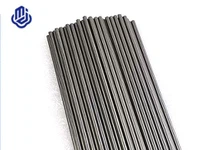


Manufacturing process of titanium plate:
Hot forging: forging process conducted above the recrystallization temperature of metal.
Hot rolling: rolling process conducted at a temperature higher than the recrystallization temperature.
Cold rolling: the rolling process in which the plastic deformation temperature is lower than the recovery temperature.
Annealing: a metal heat treatment process that slowly heats the metal to a certain temperature, maintains it for a sufficient time, and then cools it at a suitable speed (usually slow cooling, sometimes controlled cooling).
Pickling: immerse the parts in aqueous solution such as sulfuric acid to remove oxide and other films on the metal surface. It is the pretreatment or intermediate treatment of electroplating, enamel, rolling and other processes.
Features of titanium plate:
1. The titanium plate is the oxidation film on the surface, which is equivalent to a good durable and wear-resistant hair separating agent. The use of titanium plate saves the separating agent, makes it easy to peel the plate, and avoids the pretreatment process of the plate. The titanium plate is half lighter than the copper plate.
2. The service life of titanium plate is more than three times that of copper plate, and can reach 10-20 years according to the operating conditions.
3. The electrolytic copper made from titanium plate has compact crystal structure, smooth surface and excellent quality.
4. Since the titanium plate does not need to be coated with separating agent, the pollution of copper electrolyte can be avoided.
5. Improve the production capacity and reduce the production cost of electrolytic copper, so as to have better economic benefits.
Surface quality of titanium plate:
1. The surface of the plate shall be smooth and clean, showing the metal color. The plates are allowed to be supplied with sandblasted surface;
2. Slight darkening and local water marks are allowed on the plate surface; Local scratches, indentations, pits and other defects that do not exceed half of the thickness tolerance are allowed, but Small thickness;
3. The surface of the plate shall be free of macroscopic defects such as cracks, peeling, oxide skin, crimping, metal and non-metallic inclusions and traces of alkaline washing;
4. It is allowed to clear local defects along the rolling direction of the plate, but the thickness of the plate after removal shall not be less than the minimum allowable thickness;
5. If there are special requirements for surface quality of plates, they can be supplied through negotiation between the supplier and the supplier.
Country:China
Add:Baoti road,Jintai,Baoji city,Shaanxi,China
Cel/Whatsapp :+86 18309262795
Email:annie@jmyunti.com
Website:www.jm-titanium.com