How should titanium hanger be used?
Gmail:alisa@jmyunti.com
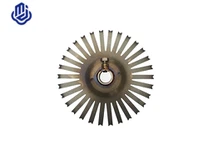
Electroplating hangers, in simple terms, are small tools used to hang workpieces during electroplating, generally made of metal materials such as copper, titanium, and stainless steel.
It allows the workpiece to be placed in the right position in the electroplating tank so that the coating can be uniform, without one side being thick and the other thin.
Moreover, it can also conduct electricity, allowing the current to be evenly distributed on the workpiece, and the electroplating quality will naturally be stable.
Most importantly, it is super convenient to use it to load and unload workpieces, and the electroplating production efficiency is great!
Types and selections of electroplating hangers
There are many types of electroplating hangers, and which one to choose depends on what your workpiece is like. Small regular workpieces? A simple hook-type hanger will do the trick!
What about large and complex workpieces? Then you have to customize a dedicated hanger, such as a stainless steel punching iron bar with an alligator clip, to ensure a great electroplating effect.
There are also hardware coating fixtures and wire fixing buckles, which are all selected according to different electroplating needs.
Application and design of electroplating hangers
When designing electroplating hangers, the shape, size, weight of the workpiece and the requirements of the electroplating process must be considered.
For workpieces with complex shapes, custom hangers are used to fix them so that the coating can be deposited evenly to avoid quality problems.
Electroplating hangers not only improve production efficiency, but also ensure the consistency of electroplating quality. They are really a powerful assistant in the electroplating process!


Hanger · Material
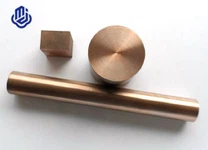
Titanium alloy material. The advantages are as follows:
1) Non-magnetic
Titanium does not contain harmful heavy metals, is non-toxic and has very good compatibility with human tissue and blood, so it is used by the medical community to make a variety of organs and body parts implanted in the human body. Titanium is a non-magnetic metal and will not be magnetized in a large magnetic field.
2) Corrosion resistance
Titanium is very stable in many media, such as strong acids and alkalis, and even aqua regia, known as the "king of acids", cannot corrode it, because in the air or in oxygen-containing media, a very thin, dense and solid oxide film will be formed on the surface of titanium to protect it from corrosion and rust.
3) High elasticity and high strength
Titanium has high tensile strength/flexural strength, and is not easily deformed by pressure and tension after processing and forming. The same volume of titanium is higher than other metal materials.
4) Lightweight
The density of titanium is 4.51G/CM3, which is higher than the density of aluminum (7.9/CN3). Although titanium is not the hardest metal, its specific strength is the highest among all metals. Titanium is 40% lighter than steel of the same volume.
5) Cold and high temperature resistance
The melting point of titanium is 1668℃. Titanium alloy can be used for a long time at a high temperature of 500℃ without softening; instead, it will increase strength. Pure titanium can maintain good ductility and toughness in an extremely cold environment of -259℃, avoiding the cold brittleness of ordinary metals.
6) Good heat transfer performance
Although the thermal conductivity of titanium is lower than that of carbon steel and copper, due to its excellent corrosion resistance, the wall thickness of titanium can be greatly reduced, and the heat exchange between the surface and steam is droplet condensation, which reduces thermal resistance. The lack of scaling on the titanium surface can reduce thermal resistance and significantly improve the heat transfer performance of titanium.
Q: Why are the colors of the hangers different?
A: Because the hanger is made of titanium alloy, it can be oxidized. The thickness of the oxide film on the surface is different, and the color is naturally different. When the aluminum alloy product is oxidized, the titanium alloy hanger is also being oxidized. When you press the hanger with your hand, the color of the pressing area changes because the thickness of the oxide film changes. The principle is that the oxide film of titanium alloy is transparent. It scatters light. Different film thicknesses scatter light differently, and the final color refracted into the human eye is different. This explains why the colors of the hangers are different.
How are titanium alloy products hung on the hanger? By adjusting the spacing of the hanger until a relatively suitable position, clamp the product through its elastic force, and hang it up one by one manually. It is necessary to ensure that its contact position is tightly fitted to ensure that the voltage and current are consistent, so that the film thickness of the aluminum alloy products made is consistent and the final color is consistent.
When fixing, you can shake it and listen for any loose sound. If there is a loud noise, you should tighten it again, but not too tight. Before hanging, the hanger must be alkali-corroded or filed to remove the old oxide film on the surface of the hanger.
When hanging, it must be installed firmly, but the parts should not be clamped, especially the parts with threads after machining. Large skins should be hung with medium-sized hangers, and the bolts should be tightened to prevent them from falling off when swinging up and down in the solution. Parts made of the same material should be installed on one hanger, and parts made of two materials are not allowed to be installed on one hanger.
Company: Baoji Dynamic Trading Co., Ltd
Country:China
Add:Baoti road,Jintai,Baoji city,Shaanxi,China
Cel:+86 18391896637(WHATSAPP)/18391894207
Gmail:alisa@jmyunti.com
Website:www.jm-titanium.com