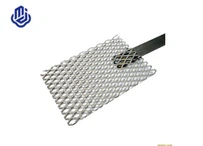
Products Description
Many industrial applications require the already treated "clean" water entering the plant to be reprocessed to a higher level to ensure that it meets the high standards required for the production process. Electrolysis is an effective method to treat this kind of water.
Influencing factors in the electrolysis process:
(1) Electrode material. The selection of electrode materials is very important, improper selection can reduce the electrolysis efficiency and increase the power consumption. We developed a new electrode for this purpose. This type of electrode has the advantages of simple connection, safe operation, less energy consumption, good electrocatalytic activity, corrosion resistance and long service life.
(2) Tank voltage. Power consumption is voltage dependent, tank voltage depends on sewage resistivity and plate spacing, we provide customized solutions according to customer needs.


Products Parameter
| Substrate | titanium (Gr1, TA1, Gr2, TA2) |
| Coating | ruthenium, iridium mix |
| Coating thickness | 0.2-20μm |
| Shape | grid, plane, tube, rod, etc |
| Chlorine evolution potential | ≤1.13 V |
| Polarization | ≤40mv |
| The water temperature ranges from | 5 ℃ to 50℃ |
| Working pressure | 0.07~2.0kgf/cm2 |
| Water discharge rate | 60L/h ~ 1000L/h |
| Storage condition | room temperature and cool |
Products Process
The coating method of ruthenium-iridium electrode mostly adopts thermal decomposition method or sol-gel method, which evenly coats the precursor solution containing ruthenium and iridium on the base material (usually titanium substrate), and decomposes the precursor to generate ruthenium-iridium oxide coating through high-temperature baking. The sol-gel method can more accurately control the thickness and microstructure of the coating through chemical reaction and heat treatment, thereby improving the catalytic effect of the electrode.
In ruthenium-iridium electrodes, ruthenium and iridium usually exist in the form of oxides, forming a ruthenium-iridium oxide (RuO2-IrO2) coating. This oxide coating structure has excellent electrical conductivity, good corrosion resistance and high electrocatalytic activity, which also allows this coated electrode to be used on a large scale in the fields of water electrolysis, chlor-alkali industry and wastewater treatment.

Products Feature
Ruthenium Iridium Coated Titanium Anode Plate process water treatment features:
1. High efficiency, quick effect, stable and reliable operation, small equipment area
2. No impurities are generated in the electrolytic cell
3. can be applied to different current density working conditions
4. can be used in the electrode reverse system
5. the anode can be used repeatedly after recoating


Products Advantage
On-demand customization: The company has a full range of products that can be customized to meet your product needs.
Manufacturers: source manufacturers, own factories, for buyers to save more time and energy.
Intimate service: with pre-sales, after-sales customer service, anytime and anywhere to solve your concerns.
Good faith management: products in the customers to win the unanimous praise, reliable.
Strict process: many years of experience in processing and customization, quality assured and guaranteed.
Products Application Field
Fuel cells: As a catalyst carrier, it improves energy conversion efficiency.
Electroplating industry: Used in high-quality electroplating processes to ensure uniform coating.
Hydrogen production by water electrolysis: Efficiently decompose water molecules to produce pure hydrogen.
Sensors: As sensitive components, they respond quickly to environmental changes.
Medical devices: Used in pacemakers, etc. to ensure long-term stable operation.
Can Ruthenium Iridium Coated Titanium Anode Plate effectively remove chloride ions from water?
Ruthenium Iridium Coated Titanium Anode Plate is a new type of water treatment technology. Its principle is to use electrochemical reaction to remove ions in water. Through electrolysis solution, the chloride ions in water can be acidified into hypochlorous acid, and then directly removed by uniform flow. Under the control of electrode potential, the ruthenium-iridium electrode can maximize the concentration of hypochlorous acid, thereby effectively removing chloride ions.
Ruthenium Iridium Coated Titanium Anode Plate can remove chloride ions in water at a certain potential. In the experiment, the ruthenium-iridium electrode was used to treat water samples with a chloride ion concentration of 50 mg/L. When the electrode potential was 1.5V, the chloride ion removal rate could be increased to more than 85%. In addition, the study also showed that the removal effect would be better under the appropriate electrode potential and solution pH value.


Contact me
Company: Baoji Dynamic Trading Co., Ltd
Country:China
Add:Baoti road,Jintai,Baoji city,Shaanxi,China
Cel:+86 18391896637(WHATSAPP)/18391894207
Gmail:alisa@jmyunti.com
Website:www.jm-titanium.com
Hot Tags: ruthenium iridium coated titanium anode plate, China, suppliers, manufacturers, factory, customized, wholesale, buy, price, cheap, sale, quotation, in stock, free sample, Pt Coated Titanium Anodes, Titanium Anode For Swimming Pool Disinfection, Ruthenium Coating Titanium Anode, Iridium Coating Titanium Anode, Lead Oxide Coated Titanium Anode, titanium anode for electrolysis