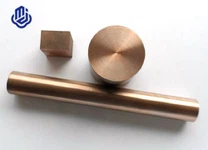
Recently, the most popular 3D printing technology is titanium alloy 3D printing technology.
Apple's autumn launch event announced that some titanium metal components on the expected release of the Apple Watch Ultra smartwatch this year will use 3D printing technology.
In July, the hinge cover section of Honor's latest foldable screen phone Magic V2 was released for the first time
Using titanium alloy 3D printing technology, the width is reduced by 27% compared to aluminum alloy material, but the strength is increased by 150%, achieving a balance between lightweight and reliability. Becoming the first large-scale application of 3D printing on mobile phones, the market space for titanium alloy 3D printing technology is expected to further expand in the future.
The advantages of 3D printing titanium alloys
With the continuous improvement of lightweight and durability requirements for consumer electronics products, as well as the pursuit of design freedom, the material of product components is crucial. Titanium alloy has significant advantages in high strength, lightweight, and corrosion resistance, making it the preferred material.
Although titanium alloy is light and hard, it also objectively faces high processing difficulties. Traditional CNC machining technology faces the problems of high processing difficulty, low efficiency, low yield rate, and high cost when dealing with titanium alloy parts with complex structures. 3D printing is formed by hot melt, which is easier than cutting processing. While solving the problem of titanium alloy material forming, it also has advantages such as short production cycle and strong customizability.
According to statistics, in the aerospace combustion chamber industry, 3D printing reduces cost by 50%; In the denture metal crown industry, 3D printing reduces labor costs by 70%; In terms of compression grinding tools, 3D printing reduces time costs by 50%.
The Future of 3D Printing Titanium Alloy
Although 3D printing technology was born as early as forty years ago, its largest application areas to date are mainly concentrated in aerospace and dentistry (price insensitive fields), with relatively slow growth in other markets

Previously, due to high costs and surface accuracy, 3D printing had a lower penetration rate in downstream applications, with more emphasis on high-end and complex manufacturing fields, and less application in civilian fields.
It is understood that the current material cost of the titanium alloy shaft cover on the Honor Folding Phone is about 30 yuan, and the processing cost is between 200 and 300 yuan. In the future, as 3D printing technology further scales up the production of titanium alloy shaft covers and improves yield, it will bring about a decrease in marginal costs, and prices are expected to further decline.
If Honor, Apple, and others introduce titanium alloy 3D printing technology, and mobile phone products are shipped smoothly, it will mean that 3D printing will officially move towards mass production. It is believed that more consumer electronics products will adopt 3D printing technology in the future, and 3D printing titanium alloy technology is expected to become a new option in the manufacturing process of consumer electronics products.
According to market research institutions, the global titanium alloy 3D market is expected to grow at an annual rate of 20% in the coming years.
In recent years, the management has continuously introduced multiple policies to support the development of the 3D printing industry, including setting industry development goals, providing financial subsidies, and being included in key areas. In addition, with the support of policies and the promotion of downstream demand, core components continue to be domestically produced, and China's 3D printing technology is becoming increasingly mature. The gap in level with advanced countries is constantly narrowing, and it is expected to open up huge market space in the future.
Reviewing the past 10 years, the compound growth rate of China's 3D printing industry has reached 41.42%. According to Zuo Shiquan's "Development and Outlook of Additive Manufacturing in Ten Years", the scale of China's 3D printing industry is expected to exceed 40 billion yuan by 2023 and 100 billion yuan by 2027. 3D printing is expected to usher in a golden period of development.
Company: Baoji Dynamic Trading Co., Ltd
Country:China
Add:Baoti road,Jintai,Baoji city,Shaanxi,China
Cel/Whatsapp :+86 18309262795
Email:annie@jmyunti.com
Website:www.jm-titanium.com