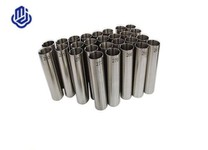
There are differences in many aspects between the titanium electrodes used in descaling and seawater electrolysis. These differences are mainly reflected in the application field, electrode design, working environment, performance requirements and subsequent treatment. The following is a specific analysis of these differences:
1. Application field
Descaling application
Working principle:
Ruthenium iridium titanium electrode mainly uses electrochemical oxidation-reduction reaction in the descaling process. Under the action of electric current, calcium and magnesium ions in the water will be migrated to the cathode area, and then calcium carbonate and magnesium hydroxide precipitation will be formed, thereby reducing the hardness of the water body and achieving the purpose of descaling.
At the same time, the electrode can also produce strong oxidants, such as hypochlorous acid, which can destroy the organic components in the scale and further promote the dissolution and removal of scale.
Features:
High efficiency: Ruthenium iridium titanium electrode has high electrolysis efficiency and can quickly remove scale in water.
Environmental protection: No need to add chemical water treatment agents, green and environmentally friendly, no pollutant emissions.
Economic efficiency: The equipment investment recovery period is short and the long-term operating cost is low.
Seawater electrolysis application
Working principle:
In the process of seawater electrolysis, ruthenium iridium titanium electrode also uses electrochemical redox reaction. But the main purpose at this time is to produce effective chlorine (such as sodium hypochlorite) or other electrolysis products by electrolyzing seawater, which is used in the fields of seawater desalination and seawater antifouling.
During the electrolysis process, the chloride ions in seawater are oxidized into chlorine gas at the anode, and then react with water to produce strong oxidants such as hypochlorous acid. These strong oxidants have strong bactericidal and disinfecting capabilities and can be used to treat microorganisms and organic matter in seawater.
Features:
Corrosion resistance: Since seawater contains a large amount of salt and corrosive substances, ruthenium iridium titanium electrodes must have extremely strong corrosion resistance.
Stability: During the electrolysis process, the electrode needs to maintain stable electrochemical properties to ensure the quality and output of the electrolysis product.
High efficiency: Similar to descaling applications, seawater electrolysis also requires electrodes to have high electrolysis efficiency.
2. Electrode design
Titanium electrode for descaling: The design focuses on improving electrolysis efficiency, enhancing the ability to dissolve scale, and considering how to effectively collect and remove the fallen scale. The structure and shape of the electrode may be optimized according to the specific scale composition and adhesion.
Titanium electrode for seawater electrolysis: The design needs to focus on corrosion resistance, electrochemical stability and electrolysis efficiency. Since seawater contains a large amount of chloride ions and other corrosive substances, the electrode material must have extremely strong corrosion resistance. At the same time, the design of the electrode also needs to ensure that the required chemical reaction can be produced stably and efficiently during the electrolysis process.
3. Working environment
Titanium electrode for descaling: The working environment is mainly a circulating water system or a cooling water system. The water quality is relatively stable, but the adhesion and dissolution of scale will pose certain challenges to the electrode.
Titanium electrode for seawater electrolysis: The working environment is seawater, the water quality is complex and changeable, and it contains a large amount of salt, microorganisms and other impurities. This environment puts higher requirements on the corrosion resistance and electrochemical stability of the electrode.
4. Performance requirements
Titanium electrode for descaling: Mainly focus on its electrolysis efficiency, scale dissolution ability and service life and other performance indicators.
Titanium electrode for seawater electrolysis: In addition to paying attention to electrolysis efficiency and service life, special attention should be paid to its corrosion resistance and electrochemical stability. These properties directly affect the stability of the electrolysis process and the quality of the electrolysis products.
5. Subsequent treatment
Titanium electrodes for descaling: During use, it is necessary to regularly check and clean the scale attachments on the electrode surface to ensure the stability of the electrolysis efficiency. At the same time, the electrodes need to be regularly maintained and serviced to extend their service life.
Titanium electrodes for seawater electrolysis: The electrolysis products and by-products produced during the electrolysis process need to be properly handled to avoid adverse effects on the environment and equipment. At the same time, the electrodes also need to be regularly maintained and serviced to ensure their long-term stable operation.
In summary, there are obvious differences in the application fields, electrode design, working environment, performance requirements, and subsequent treatment of titanium electrodes used for descaling and seawater electrolysis. These differences are due to the specific needs and challenges in different application scenarios. In practical applications, it is necessary to select appropriate electrode materials and design solutions according to specific circumstances.
Company: Baoji Dynamic Trading Co., Ltd
Country:China
Add:Baoti road,Jintai,Baoji city,Shaanxi,China
Cel:+86 18391896637(WHATSAPP)/18391894207
Gmail:alisa@jmyunti.com
Website:www.jm-titanium.com