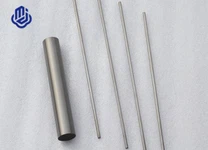
1. Definition of insoluble anode
Anodes that do not dissolve themselves and only undergo oxidation reactions when current passes through during the electroplating process are collectively called insoluble anodes. Insoluble anode materials in electroplating include lead, carbon, platinum, graphite, nickel, stainless steel, titanium plated with platinum, iridium-plated tantalum, ruthenium-plated iridium, rhodium, etc.
2. For high-end copper electroplating anodes in the circuit board industry
Characteristics of insoluble anodes
The scenarios where insoluble anodes are used in the circuit board industry mainly include electroplating copper, electroplating gold, electroplating silver, and environmentally friendly treatment of ammonia nitrogen and COD, etc. The most widely used HDI board copper-plated insoluble iridium and tantalum anode on circuit boards has high requirements on the consumption of light agent. The stability of electroplating light agent during the electroplating process has a crucial impact on the quality of electroplating.
The insoluble anode plays an anode conductive role during the entire electroplating process and precipitates oxygen or oxidized metal ions. There are two main effects of using insoluble anodes on circuit boards on the bath liquid. First, oxygen evolution on the surface of the anode will also cause additional loss of electroplating brightener. What occurs on the surface of the anode catalytic coating is a direct oxidation reaction. Its main reaction The hydroxide in the bath liquid is catalyzed by the precious metal catalytic coating to lose an electron at a lower potential and become oxygen. At the same time, the organic matter in the bath liquid also has the opportunity to be oxidized by discharge on the anode. The key point in the anode manufacturing process is to control the oxidation. Oxygen potential, do not allow the organic matter in the bath liquid to have the opportunity to be oxidized by direct discharge on the anode. The second affects the dissolved oxygen content of the bath liquid. The oxygen generated on the anode surface needs to escape from the anode and run out of the bath as quickly as possible to reduce its residence time in the bath. (The reaction mechanism of pulse iron-containing ions is different and very little oxygen is released).
Insoluble anodes have the following advantages over copper balls in use:
01
The anode current is not limited and can break through the current density bottleneck of the anode copper ball 4.2asd (the anode film is easy to fall off and passivate if the current density is too high), increase the production speed and increase the production capacity, especially for the FPC production line, the continuous production of RTR has been fully The factory uses insoluble anodes.
02
During the electroplating process, the anode undergoes an oxidation reaction to obtain electrons from hydroxyl radicals to generate oxygen. Without anode mud, only the release of oxygen can keep the metal ion concentration distribution in the electroplating solution at a stable level; (after solving the impact of pulses on the life of the anode , it has great benefits for pulse production lines, it can significantly improve product quality, reduce maintenance costs, and increase product utilization rate).
03
The size of the anode is stable, and the anode area does not change during the electroplating process. The primary current density distribution can be considered as a constant state, which is of great benefit to improving the current density distribution, especially for HDI fine lines, hole filling, and pulses.
3. Insoluble anode process requirements
The difference between the insoluble anodes we commonly use in circuit board electroplating and ordinary insoluble anodes lies in the loss of organic matter. This depends on the composition and structure of the precious metal coating, that is, the catalytic layer.
There are two aspects that need to be ensured during the production process. First, ensure a strong bonding force, which refers to the bonding force between the coating and the titanium substrate. Second, ensure the conversion rate of precious metals in the coating into effective catalysts.
In the first aspect, ensuring the bonding force requires: 1. A clean surface; 2. Appropriate surface roughness; 3. The crystal structure of the catalytic layer is similar to the underlying crystal structure (rutile structure). According to the principle of similar compatibility, a rivet is formed. The combined structure can greatly enhance the bonding force.
The second aspect is the conversion rate of precious metals in the coating. This requires a large amount of actual measurement data on the formula and production process to find the best formula and production process.
4. Introduction to the production process of insoluble anodes
Hot rolling/cold rolling of titanium ingots Sponge titanium becomes titanium plates of different thicknesses:
Punching (cutting) Titanium plates are made into titanium meshes of different meshes:
Pretreatment Clean the surface of the titanium mesh to obtain a clean titanium mesh surface:
Coating/sintering Uniformly coat the precious metal to form the required oxide:
Welding and assembly Welding and assembly into finished products:
After the above steps, we strictly follow the production quality control to produce high-performance and low-cost anodes, and provide customers with high-quality anodes.
Contact us for more information. Thank you
Nicole
Company: Baoji Jimiyun Dynamic Co., Ltd
Country:China
Add:Baoti road,Jintai,Baoji city,Shaanxi,China
Cel:+86 13369210920
Gmail:nicole@jmyunti.com
Website:www.jm-titanium.com