
Titanium is a shiny, silvery transition metal known for its excellent strength-to-weight ratio and excellent corrosion resistance. The metal has a wide range of applications, from aerospace to biomedical devices. However, in order to improve its performance and aesthetics, titanium needs to be anodized. Titanium anodizing not only enhances the metal's defensive properties against wear and corrosion, but also introduces a range of colors without the use of external pigments or dyes. The science behind these colors and enhancements is both fascinating and crucial to the industry that uses anodized titanium oxide.
Anodizing, the word derived from "anode," is an electrochemical process that thickens and hardens the protective oxides that naturally form on the surface of titanium. The science behind titanium anodizing is not only fascinating, but also crucial for many industries that require rugged and aesthetically pleasing components.
1. Basic electrochemical reaction
At its core, anodizing is a controlled oxidation process. When titanium is anodized, it acts as the anode in the circuit. Immersed in an electrolytic solution, usually containing dilute sulfuric acid, an electric current passes through the solution. When the current flows, oxygen ions in the electrolyte migrate to the surface of titanium and react with it to form a layer of titanium dioxide (TiO2). This layer is harder, more protective and more porous than the natural oxide layer.
During the anodizing process, the following electrochemical reactions occur:
Ti + 2H2O → TiO2 + 4H+ + 4e−
2. Thickness and coloring
One of the distinguishing features of titanium anodizing is the range of colors that can be achieved without dyes. The color is not the result of pigmentation, but rather an optical phenomenon called interference. As the thickness of the oxide layer increases (controlled by the voltage applied during anodizing), different colors become visible due to the way light waves interfere with each other after reflecting off the outer surface of the oxide layer and the titanium surface below.
3. The importance of consistency
The anodizing process requires precision. Any inhomogeneity of the applied voltage or inconsistencies of the electrolyte can result in uneven coloring or oxide thickness. A uniform electric field and a well-prepared titanium surface (free of contaminants) are essential for achieving consistent results.
4. Durability of oxide layer
The layer of titanium dioxide formed during anodizing is incredibly elastic. It not only has excellent corrosion resistance, but also has high wear resistance and can withstand great pressure. This durability, combined with the non-toxic properties of TiO2, has led to the widespread use of anodized titanium oxide, especially in environments such as medical implants that are prone to wear or human contact.
What are the benefits of anodized titanium oxide?
Although the process of anodized titanium oxide is complex, it has numerous advantages that solidify its position in various industries from aerospace to jewelry design. Understanding these benefits can provide valuable insight into why so many industries choose anodized titanium over unanodized titanium.
1. Enhance aesthetics
One of the most remarkable advantages of titanium anodizing is that it can produce a vivid color spectrum. A range of colors, from gold to purple to blue, are achieved without dyes or pigments. The hue is caused by light interference on the surface of the oxide layer. Anodized surface treatment offers customization services because different voltages produce different colors, allowing for precision and customization in aesthetic design projects.
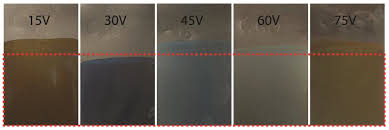
( Anodized titanium oxide color at different voltages)
2. Improve corrosion resistance
Anodized titanium oxide shows excellent resistance to environmental factors, making it ideal for challenging environments. An artificially reinforced oxide layer acts as a barrier to prevent corrosive agents from reaching the base titanium metal. In addition, anodized titanium parts have a longer service life in corrosive environments than non-anodized titanium parts.
3. Improve wear resistance
In addition to corrosion, anodized titanium oxide is resistant to wear and tear, ensuring extended component life. The anodizing process produces a hard, non-porous oxide layer that reduces wear, especially on parts with moving contacts.
4. Biocompatibility
The medical industry, especially orthopedics, places a high value on anodized titanium because it is compatible with the human body. Anodized titanium oxide does not react with the body, making it ideal for implants and other medical devices. In addition, the process does not introduce any harmful substances, ensuring that the anodized surface remains safe for internal use.
5. Heat resistance
Anodized titanium parts can withstand higher temperatures without deformation or loss of color. The oxide layer acts as a barrier, preventing thermal damage and maintaining the structural integrity of the components.
6. Electrical insulation
The oxide layer produced in the process of anodizing is a poor electrical conductor, making the anodized titanium oxide a good insulator. In electrical applications, anodized titanium oxide prevents unnecessary currents and ensures safety and normal function.
Country:China
Add:Baoti road,Jintai,Baoji city,Shaanxi,China
Cel/Whatsapp :+86 18309262795
Email:annie@jmyunti.com
Website:www.jm-titanium.com


