Process method of titanium plate for automobile manufacture
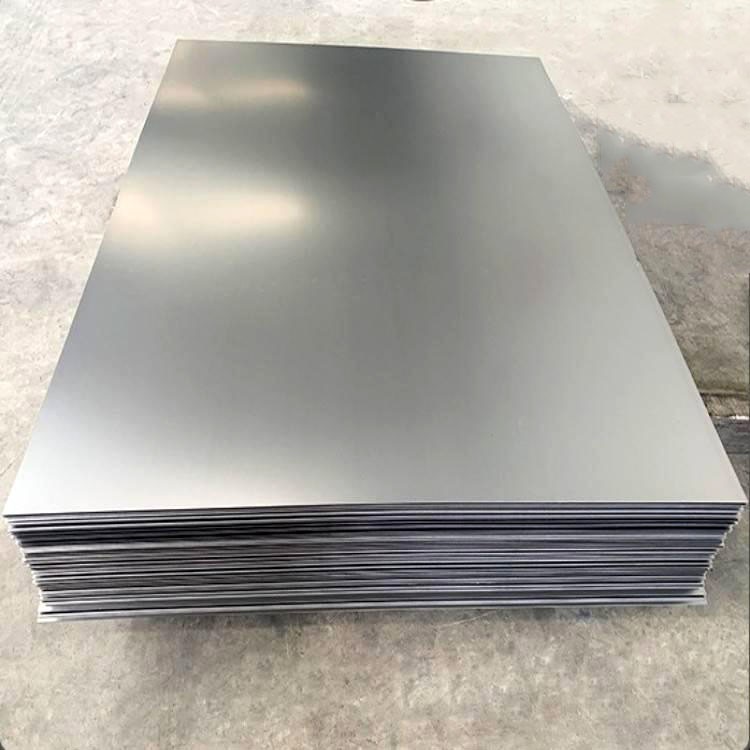
Titanium plate has the characteristics of low density, high specific strength and corrosion resistance, and has great application in the automotive industry.
use potential. The use of titanium and titanium alloys in cars can save fuel, reduce engine noise and vibration, and improve service life. However, in order to enter the automobile market, the national titanium materials used for automobile materials such as steel and AI for a long time, in addition to their own functional advantages, must further reduce the cost to a level acceptable to the automobile industry. The metallurgical parts of Ti titanium plate for automobiles is a promising field, but currently restricted by factors such as cost, the application and development are slow. The use of leading titanium plate metallurgical technology to prepare titanium plate metallurgical parts can not only greatly reduce costs, but also help the promotion of titanium and its alloys in the automotive industry, making it a major industry after the aerospace industry. scope of application. The development of low-cost titanium and its alloy titanium plates can provide low-cost materials for metallurgical parts of titanium and titanium plates for automobiles. Judging from the existing technology, the main ones suitable for the automobile industry are the sponge titanium powder method, the hydrogenation dehydrogenation method and the metal hydride recovery method.

1. Sponge titanium powder method
This is a way to meet the needs of the automotive industry in terms of cost, mainly using titanium plates.
The traditional production of sponge Ti and the residual material in the process is broken; the obtained titanium plate is often relatively thick and rich in high CI elements. Huachang Company of the United States uses the gas phase method to successively enter TiCI4 and Mg vapor into a tubular furnace at 850 ° C, and quickly generate fine Ti powder and MgCl2, but it is difficult to separate such fine powder from MgCI2, and the 0 content is high; Japan Create a spray reaction method, spray the gas on the liquid Mg, and make it react to form particles. The test shows that every 100 grams of Mg and 400 grams of TiCI4 can prepare about 100 grams of Ti powder with a particle size of tens of microns, and the production efficiency It has increased by 2 times, and the cost has dropped by 50%. It is expected to be used as a raw material for metallurgical Ti products of titanium plates.
2. Hydrodehydrogenation
This method is because the titanium plate produced has a wide particle size design and low cost, and the demand for raw materials is not strict.
The technology is relatively easy to complete. After years of improvement and implementation, it has become the most popular method for preparing Ti powder at home and abroad.
the primary method. However, the titanium plates prepared by this method tend to have a high content of 0 and N. Northwest China Nonferrous Metals Research Institute uses hydrodehydrogenation technology to hydrodehydrogenate the ingot, and prepares high-quality titanium plates with low O, N, CI, and has excellent performance. Currently, it has been able to produce 0 content less than 0.20%. Titanium plate is expected to provide stable titanium and titanium plates for automotive titanium plate metallurgical parts.
3. Metal hydride recovery method
TiCI4 can be recovered with hydrogen at 3500 °C, and TiO2 can be recovered with carbon heat above 1800 °C.
In order to reduce the reaction temperature, the former Soviet Union scientists proposed to use CaH2 to restore TiO2 and TiCI4, which can be carried out at a temperature of 1100 ~ 1200 ° C, and the reaction generates TiH2, and then removes H to obtain Ti powder. Because this method has no C element to participate in the reaction, it is possible to obtain a titanium plate with a very low CI content. It is said that its cost is only one-third of the traditional hydrogenation dehydrogenation method, and it has reached the level of planned production. Although the Ti powder produced by this method has a higher H content, it is reported that the presence of a small amount of H is beneficial to the sintering and improved microstructure of the titanium plate, and can be completely removed in the subsequent vacuum sintering and annealing process.
Company: Baoji Dynamic Trading Co., Ltd
Country:China
Add:Baoti road,Jintai,Baoji city,Shaanxi,China
Cel:+86 18391896637(WHATSAPP)
Gmail:alisa@jmyunti.com
Website:www.jm-titanium.com