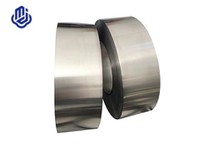
When welding titanium plates and titanium tubes, pores are often encountered problems. The root cause of the formation of pores is the result of the influence of hydrogen. The formation of porosity in the weld metal mainly affects the fatigue strength of the joint. Hydrogen is the main reason for the formation of cold cracks and pores. Because hydrogen is less than 300 ℃, the solubility in α phase is very small, and the limit solubility is only 0.002% at room temperature. When the weld or heat affected zone is cooled to below 300°C after welding, supersaturated hydrogen is precipitated in the form of titanium hydride (γ phase).
The volume increases and intergranular stress is generated. The development of this stress will cause intergranular microcracks, and the intergranular microcracks will expand into cracks under the action of external stress. When the titanium plate and the titanium tube are welded, the possibility of hot cracks in the welded joint is very small. This is because the content of impurities such as S, P, and C in the titanium plate and titanium tube is very small, and the low melting point eutectic formed by S and P is not easy. Appears on the grain boundary, coupled with the narrow effective crystallization temperature range, the shrinkage of the titanium plate and the titanium tube is small when solidified, and the weld metal will not produce hot cracks. However, when titanium plates and titanium tubes are welded, cold cracks may occur in the heat-affected zone, which is characterized by the fact that cracks occur several hours or even longer after welding, which is called delayed cracking. During the welding process, hydrogen diffuses from the high-temperature deep pool to the lower-temperature heat-affected zone. The increase of hydrogen content increases the amount of TiH2 precipitated in this zone, which increases the brittleness of the heat-affected zone. In addition, due to the volume expansion of the hydride precipitation, a large tissue stress is caused , coupled with the diffusion and aggregation of hydrogen atoms to the high stress parts of the region, resulting in the formation of cracks.
When welding materials such as titanium plates and titanium tubes, when the temperature is higher than 500~700 °C, it is easy to absorb oxygen, hydrogen and nitrogen in the air, which seriously affects the welding quality. Therefore, when welding titanium alloys, the weld area of the entire molten pool and high temperature parts (above 400~650℃) must be strictly protected. For this reason, special protective measures must be taken when welding titanium plates and titanium tubes. Therefore, the method of argon arc welding is adopted, and a welding torch with a larger spray size is used to expand the area of the gas protection zone. When the nozzle is not enough to protect the high temperature metal in the weld seam and the near seam area, an argon protective drag cover should be added.
Correctly select the welding process parameters to completely remove the oxide scale, oil and other organic substances on the surface of the weldment and the surface of the welding wire. Control the flow and flow rate of argon gas to prevent turbulent flow and affect the effect of inflatable protection. It is feasible to use manual tungsten argon arc welding titanium alloy welding to deal with cracks, and satisfactory results can be obtained. The pre-welding preparation and groove selection are:
(1) Selection of welding materials. The purity of argon should be no less than 99.99%, the dew point should be below -40℃, and the relative humidity should be less than 5%. When the pressure in the argon cylinder drops to 0.981 MPa, it should be stopped. The filler wire is generally made of homogeneous material. In order to improve the plasticity of the joint, the welding wire TC3, which is slightly lower than the base metal alloy, can be used. The welding wire: TC3 is used for this welding.
(2) The surface quality of the weldment and welding wire has a great influence on the mechanical properties of the welded joint. The test piece and welding wire can be pickled before welding. Rinse with clean water and apply welding immediately after drying. Use acetone, ethanol, carbon tetrachloride, methanol, etc. to wipe the groove of the titanium plate and its two sides (within 50 mm respectively), the surface of the welding wire, and the part where the tool clip contacts the titanium plate.
(3) Selection of welding equipment. Titanium plate and titanium tube argon arc welding should use a DC argon arc welding power source with reduced external characteristics and high-frequency arc ignition, and the delayed gas transfer time should not be less than 15s to avoid oxidation and pollution during welding. Therefore, the WSM-315 IGBT inverter DC pulse argon arc welding machine is used.
(4) The choice of groove form. In principle, minimize the number of welded layers and weld metal. With the increase of the number of welded layers, the accumulated inhalation of the weld increases, which affects the performance of the welded joint. In addition, due to the large size of the welding pool when the titanium plate and the titanium tube are welded, the weldment is billed with a V-shaped groove of 70~80°.
Contact us for more information. Thank you
Nicole
Company: Baoji Jimiyun Dynamic Co., Ltd
Cuntry:China
Add:Baoti road,Jintai,Baoji city,Shaanxi,China
Cel:+86 13369210920
Gmail:nicole@jmyunti.com
Website:www.jm-titanium.com