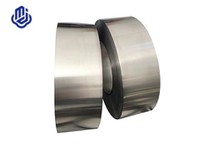
What are anodic and cathodic coatings?
According to the electrochemical relationship between the coating metal and the base metal, the coating can be divided into anodic coating and cathodic coating. Under normal conditions, when the electrode potential of the coating metal is negative than that of the base metal, it is called an anode coating. On the contrary, it is called cathode coating. What is the protective effect of the anode coating and the cathode coating on the base metal? The protection principle of the anode coating is based on the fact that the potential of the anode coating is negative compared with the base metal, and its electrolytic pressure is large, so it becomes the anode in the corrosion battery, thus delaying Corrosion of the base metal. Even when the base metal is slightly exposed, the coating can still play a protective role. Therefore, the number of pores on the anodic coating has little effect on the protective performance. In terms of thickness, the thicker the coating, the stronger the protection. The cathodic coating only has a purely mechanical isolation effect on the base metal, and has no electrochemical protection like the anodic coating, so it must be protected when the porosity of the coating is small, otherwise, in the pores or damage of the coating, The base metal will act as the anode of the corrosion cell, which accelerates the corrosion of the base metal. Generally, the porosity of the coating decreases as the thickness of the coating increases, so the greater the thickness, the stronger the protective performance of the cathodic coating.
The principle of micro-electrolysis technology to treat enterprise sewage:
Micro-electrolysis technology is an ideal process for treating high-concentration organic wastewater, and it is also called internal electrolysis. Under the circumstances of different points, use the potential difference of 1.2 volts produced by the micro-electrolytic material filled in the waste water to decompose the waste water, so as to achieve the purpose of degrading organic pollutants. When the system buckets water, the equipment will Countless micro-battery systems will be formed, forming an electric field in the action space.
The working principle of micro-electrolysis is based on the joint action of electrochemistry, redox, physical adsorption and flocculation to treat wastewater. The method has the advantages of wide application range, good treatment effect, low cost, convenient operation and maintenance, and no need to consume power resources. This process can greatly reduce cod and chroma when used in the treatment of refractory high-concentration wastewater, improve the biodegradability of wastewater, and have a good effect on the removal of ammonia nitrogen. The micro-electrolysis materials used in the traditional micro-electrolysis process are generally iron filings and charcoal, which need to be activated with acid and alkali before use. During the process of use, it is easy to passivate and harden. At the same time, because iron and carbon are in physical contact, so their It is easy to form an isolation layer between them, so that the micro-electrolysis cannot continue and loses its function, which leads to frequent replacement of electrolytic materials, which not only has a large workload and high cost, but also affects the treatment effect and efficiency of wastewater.
Company: Baoji Dynamic Trading Co., Ltd
Country:China
Add:Baoti road,Jintai,Baoji city,Shaanxi,China
Cel:+86 18391896637(WHATSAPP)
Gmail:alisa@jmyunti.com
Website:www.jm-titanium.com