TC4 titanium alloy (Ti-6Al-4V) has been widely applied in numerous high-end fields such as aerospace and medical care due to its high strength, lightweight and excellent corrosion resistance. However, due to its unique material properties, it faces many technological difficulties during the bending process. To ensure the production of high-quality TC4 titanium alloy bent parts, the following core precautions must be strictly followed:
Preheating and temperature control
Precise control to avoid potential hazards. TC4 titanium alloy has relatively low plasticity at room temperature. If bending operations are carried out in a low-temperature environment, cracking is highly likely to occur. Therefore, before bending, the workpiece must be preheated, and the preheating temperature should be controlled within the range of 200-400 ℃. At the same time, special attention should be paid to avoiding the occurrence of local overheating. When the temperature exceeds 500℃, the grains of TC4 titanium alloy will become coarse, which in turn leads to a significant reduction in its mechanical properties. To achieve uniform heating and to monitor the temperature of the workpiece in real time, an infrared thermometer should be used to closely monitor the temperature of the workpiece. Only by ensuring precise temperature control can a solid foundation be laid for subsequent bending processing.
Bending speed and pressure control: Low speed and gentle pressure, precise compensation. TC4 titanium alloy has the characteristic of "strain aging", which means that stress concentration problems are prone to occur during rapid bending. To avoid this situation, a low-speed bending method should be adopted during bending, and the bending speed is usually controlled at ≤5mm/s. When determining the bending pressure, it is necessary to find the optimal pressure value through trial bending. If the pressure is too small, the bent workpiece is prone to springback. Moreover, the springback rate of TC4 titanium alloy is much higher than that of ordinary steel, so a compensation allowance of 10% to 15% needs to be reserved during the processing. Conversely, if the pressure is too high, it may cause defects such as wrinkling or cracking at the bending point, seriously affecting the quality of the bent part.

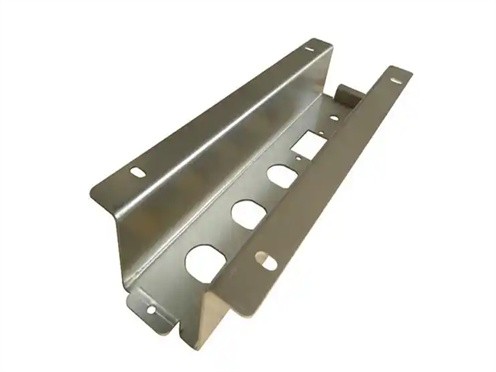
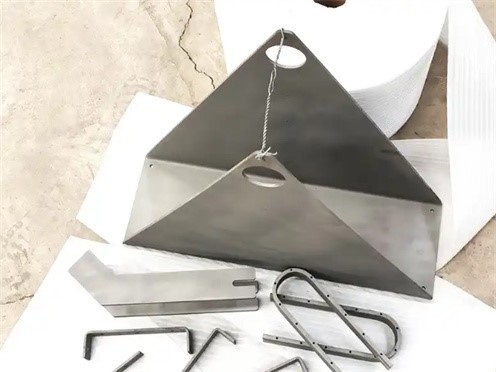
Mold and lubrication selection
The selection of high-quality and suitable molds to reduce friction is crucial for the machining accuracy of TC4 titanium alloy bent parts. Due to the high hardness of TC4 titanium alloy, in order to prevent mold wear from causing deviations in bending accuracy, molds made of high-strength materials, such as H13 hot work die steel, should be selected. This type of mold material has excellent wear resistance and thermal stability, and can meet the requirements of TC4 titanium alloy bending processing. Before bending, it is also necessary to apply a special titanium alloy lubricant, such as a high-temperature lubricant containing molybdenum, to the contact area between the workpiece and the die. Applying lubricant can effectively reduce frictional resistance, prevent scratches on the workpiece surface, and at the same time avoid adhesion between the die and the workpiece, ensuring the smooth progress of the bending process.
Subsequent processing and quality inspection
After the bending process is completed, there will be internal processing stress inside the TC4 titanium alloy workpiece to eliminate stress and strictly control it. If not eliminated in time, these internal stresses may cause the workpiece to deform during later use. Therefore, stress relief annealing treatment is required. The workpiece should be held at a temperature of 550-600 ℃ for 1-2 hours to eliminate the internal stress during processing. Quality inspection is a key link to ensure that TC4 titanium alloy bent parts meet the usage requirements. During the detection process, the following aspects need to be verified with emphasis:
The tolerance of the bending Angle is in accordance with the GB/T 3621 standard, and the tolerance of the bending Angle should be controlled within ±1°. Only when the Angle tolerance meets the requirements can the accuracy of the bent part be guaranteed during assembly and use.
Surface defect
Carefully inspect the surface of the bent part for any defects such as cracks or depressions. These defects not only affect the aesthetic appearance of the bent parts, but may also reduce their mechanical properties and service life.
Country:China
Add:Baoti road,Jintai,Baoji city,Shaanxi,China
Cel/Whatsapp :+86 18309262795
Email:annie@jmyunti.com
Website:www.jm-titanium.com