


Products Description

The basic principle of hydrogen fuel cells is the reverse reaction of electrolyzing water, which supplies hydrogen and oxygen to the anode and cathode respectively. Hydrogen diffuses outward through the anode and reacts with the electrolyte, releasing electrons to reach the cathode through an external load.
1, Advantages of Hydrogen Energy Fuel Cells Hydrogen energy fuel cells are environmentally pollution-free. They are produced through electrochemical reactions rather than combustion (gasoline, diesel) or energy storage (batteries). The most typical traditional backup power solution is that combustion releases pollutants such as COx, NOx, SOx gases, and dust. Fuel cells only produce water and heat. If hydrogen is generated through renewable energy, the entire cycle is a process that completely eliminates the emission of harmful substances.
2, Hydrogen fuel cell technology features: Strictly speaking, hydrogen fuel cell is a power generation device, similar to a power plant, which is an electrochemical power generation device that directly converts chemical energy into electrical energy. In addition, the electrodes of hydrogen fuel cells are made of specially made porous materials, which is a key technology of hydrogen fuel cells. It not only provides a large contact surface for gas and electrolyte, but also catalyzes the chemical reactions of the battery. Fuel cells operate quietly, with a noise level of only about 55dB, equivalent to the level of normal human conversation. This makes fuel cells suitable for indoor installation or in areas with limited noise outdoors. In fact, the history of hydrogen fuel cells is very early. The first fuel cell was manufactured by British scientist William Grove in 1845, dating back to the 25th year of the Daoguang era. He proved that under certain conditions, the combination of hydrogen and oxygen produces an electric current, just like the production of water.
Dry batteries and batteries are energy storage devices that store electrical energy and release it when needed; Strictly speaking, hydrogen fuel cells are a type of power generation device, similar to power plants, which are electrochemical power generation devices that directly convert chemical energy into electrical energy. In addition, the electrodes of hydrogen fuel cells are made of specially made porous materials, which is a key technology of hydrogen fuel cells. It not only provides a large contact surface for gas and electrolyte, but also catalyzes the chemical reactions of the battery.
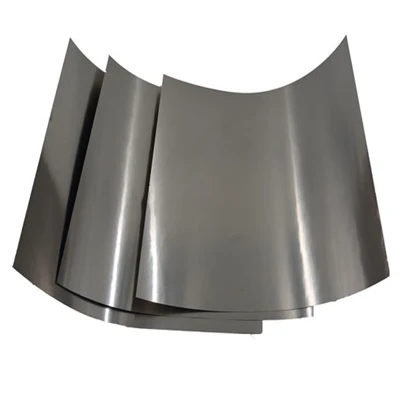
| Description | Titanium foil/titanium strip | |||
| Material | Gr1, Gr2, Gr3,Gr4,Gr5, Gr7, Gr6,Gr9, Gr11, Gr12 ,Gr16, Gr17,Gr25 TA0,TA1,TA2,TA5,TA6,TA7,TA9,TA10,TB2,TC1,TC2,TC3,TC4 |
|||
| Standard | ASTM B265,ASME SB265,DIN17851,TiA16Zr5Mo1.5,JIS4100-2007,GB3461-2007 | |||
| Size | Thickness:0.01-2.0mm Width:0.7-240mm Length:according to requirements |
|||
| Package | Standard export package,suit for all kinds of transport ,or as required. | |||
Product picture
Our Products


The characteristics of hydrogen fuel cells
Compared with traditional energy conversion technologies, hydrogen fuel cell technology has many advantages and therefore has enormous application prospects.
1. Pollution-free
Hydrogen fuel cells are environmentally friendly. It is a typical traditional backup power solution that uses electrochemical reactions instead of combustion (gasoline, diesel) or energy storage (batteries). Combustion releases pollutants such as COx, NOx, SOx gases, and dust. As mentioned above, fuel cells only produce water and heat. If hydrogen is generated through renewable energy sources such as photovoltaic panels and wind power generation, the entire cycle is a process that completely eliminates the emission of harmful substances.
2. Low noise
Hydrogen fuel cells operate quietly, with a noise level of only about 55dB, equivalent to the level of normal human conversation. This makes fuel cells suitable for indoor installation or in areas with limited noise outdoors.
3. High efficiency
The power generation efficiency of hydrogen fuel cells can reach over 50%, which is determined by the conversion properties of fuel cells. Chemical energy is directly converted into electrical energy without the need for intermediate conversion between thermal and mechanical energy (generators).
4. Sufficient raw materials
Hydrogen fuel cells use hydrogen as fuel. Although hydrogen does not exist in free form in nature, it can be produced through local existing energy sources (renewable energy, nuclear energy, bioenergy, coal, or natural gas) through water electrolysis processes or hydrocarbon reforming. This can greatly reduce dependence on external petroleum energy.



The current pain points of hydrogen fuel cells:
Firstly, safety issues: Hydrogen is a flammable and explosive gas, and the "hydrogen balloon explosion tragedy" in the United States in 1986 is still vividly remembered. Therefore, people are very concerned about the safety of hydrogen energy. However, when the concentration of hydrogen in the air is between 4% -75.6%, it will explode when it encounters a fire source. Even if hydrogen gas leaks from hydrogen fuel trucks, it will quickly spread into the air, making it difficult to reach this concentration and the likelihood of an explosion is low.
Secondly, vehicle costs: According to a report by the Hydrogen Council, developing a network of hydrogen refueling stations and infrastructure for transporting hydrogen fuel on a global scale would cost approximately $30 billion, while developing renewable hydrogen would require an additional $20 billion. This is also the main reason why many Japanese companies are delaying the development of hydrogen fuel vehicles.
For hydrogen fuel trucks, fuel cell systems and hydrogen storage systems account for over 65% of the total vehicle cost, while the battery cost of pure electric trucks only accounts for 40%. The high cost is an important factor limiting the development of hydrogen fuel trucks.
Thirdly, there are too few hydrogen refueling stations: gas stations can be seen everywhere, and there are very few hydrogen refueling stations. The scarcity of hydrogen fuel trucks has led them to only dare to use them in specific areas or routes, becoming a stumbling block on their development path.
The application of hydrogen fuel cells
Hydrogen fuel cell is a power generation device that can efficiently utilize hydrogen energy, and has great application prospects in the context of sustainable development with global carbon peaking and carbon neutrality. The main application areas of hydrogen fuel cells are as follows:
1. Transportation: Hydrogen fuel cell vehicles have been commercialized and promoted, providing advantages such as zero emissions, long endurance, and fast refueling, making them a promising clean energy vehicle.
2. Electricity and energy storage: Hydrogen fuel cells can serve as an energy storage method, balancing energy supply and demand, and providing storage solutions for renewable energy. In addition, hydrogen fuel cells can also directly generate electricity for household and industrial use.
3. Aerospace: Hydrogen fuel cells can provide clean and efficient power sources, and are therefore widely used in fields such as satellites, spacecraft, and drones.
4. Military applications: Hydrogen fuel cells can provide independent, silent, and sustainable power sources for equipment, and are widely used in fields such as drones, reconnaissance vehicles, and portable power equipment.
5. Other applications: Hydrogen fuel cells can also be applied in harsh environments such as mobile communication, emergency rescue, deep-sea exploration, mining, and oil fields, providing people with efficient, reliable, and environmentally friendly energy solutions.
Contact

Company: Baoji Dynamic Trading Co., Ltd
Country:China
Add:Baoti road,Jintai,Baoji city,Shaanxi,China
Cel/Whatsapp :+86 18309262795
Email:annie@jmyunti.com
Website:www.jm-titanium.com
Hot Tags: titanium foil for hydrogen fuel cells, China, suppliers, manufacturers, factory, customized, wholesale, buy, price, cheap, sale, quotation, in stock, free sample, titanium hexagon domed cap nuts, titanium tube for heat exchanger, DIN439 titanium nut, titanium bolt DIN7985, titanium bolt DIN85, hex titanium nut and hex jam titanium nut


