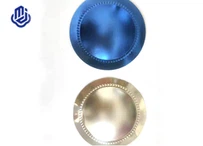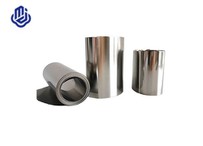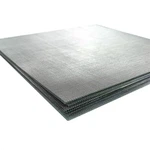

Products Description

In solar cells, titanium foil is used as the substrate, on which a diffusion barrier layer, a first electrode layer, an absorption layer, a buffer layer, a second electrode layer, an anti reflection layer, and a surface electrode layer are sequentially formed. This structure can effectively block impurities in titanium foil from entering the absorption layer, while increasing the bonding strength between the diffusion barrier layer and the substrate, as well as the first electrode layer, thereby improving the performance of solar cells.
In all vanadium flow batteries, titanium foil surfaces can directly grow titanium nitride nanowires and nanotubes, which exhibit excellent electrocatalytic activity and reversibility. The diameter and length of titanium nitride nanowires (TiN NWs) and nanotubes (TiN NTs) are suitable, with high electrical conductivity and electrocatalytic performance, which can significantly improve the energy efficiency of batteries. For example, when the current density of charging and discharging is 10 mA · cm ^ -2, titanium nitride nanofilm as the negative electrode of vanadium batteries can achieve an energy efficiency of up to 73.60%, demonstrating its potential application prospects.
In addition, titanium foil is also used to prevent rapid electrochemical corrosion, improve the stability and service life of batteries. These applications demonstrate the important role of titanium foil in battery technology, particularly in improving battery performance and stability.
| Grade | Specification(mm) | Manufacturing Process | Standard |
| Gr1 | THK(0.02~1.0) × W(20~560)× ≤ L | Hot Rolled |
ASTM B265 ASME SB265 AMS 4911 ASTM F67 ASTM F136 ISO 5832-2 ISO 5832-2 Other related standards |
| Gr2 | |||
| Gr3 | |||
| Gr4 | |||
| Gr5 | THK(0.02~1.0) × W(20~560)× ≤ L | cold Rolled | |
| Gr6 | |||
| Gr7 | |||
| Gr9 | |||
| Gr11 | |||
| Gr12 | |||
| Gr13 |
Hydrogen fuel cell bipolar plate
Titanium and titanium alloys have low density, high specific strength, and excellent corrosion resistance in acidic environments, and have high application value in hydrogen fuel cell bipolar plates. The materials of bipolar plates are mainly divided into three types, including graphite bipolar plates, composite bipolar plates, and metal bipolar plates. Among them, metal bipolar plates have characteristics such as thin thickness, excellent thermal conductivity, high mechanical strength, and good gas barrier properties, which help to improve the power density of batteries. In addition, the processing technology of metal materials is relatively mature, and high-precision complex flow fields can be manufactured through methods such as stamping, die casting, and laser forming, making it easy to achieve large-scale production of electrode plates. Therefore, metal bipolar plates are the mainstream choice for bipolar plate materials in hydrogen fuel cells.
Among metal materials, stainless steel, aluminum alloy, and titanium alloy are common bipolar plate materials. Among them, titanium and titanium alloys have low density and high specific strength, and have excellent corrosion resistance in hydrogen fuel cells. They can significantly reduce the weight and volume of bipolar plates, thereby greatly improving the quality power ratio and volume power ratio of the battery. Meanwhile, the corrosion products generated during the use of titanium and titanium alloys have lower toxicity to proton exchange membranes and catalysts, which helps to improve the stability and durability of batteries.
The application advantages of titanium foil in zinc ion batteries
Titanium foil, as a positive electrode material for zinc ion batteries, has the following advantages:
1. High conductivity
Titanium foil has good conductivity and can effectively conduct charges, thereby increasing the output power of the battery. In addition, the conductivity of titanium foil is not affected by corrosion and has good stability.
2. Good chemical stability
Titanium foil has good chemical stability in electrolytes, does not undergo chemical reactions and corrosion, thereby improving the cycle life of zinc ion batteries.
3. Suitable for preparing nanomaterials
The surface of titanium foil is prone to forming nanostructures, which can be used to prepare nanomaterials as positive electrode materials for zinc ion batteries, increase the surface area of the material, and improve the reaction rate and energy density of the material.
Product display


How to conduct lifespan analysis of hydrogen fuel cells?
The lifespan analysis of hydrogen fuel cells can be conducted through the following aspects:
1. Dynamic working condition life testing: Considering the complexity of working conditions, temperature changes, load changes, and other factors, design a suitable testing plan to comprehensively evaluate the performance of hydrogen fuel cells.
2. Monitoring performance indicators: By monitoring changes in parameters such as voltage and current of hydrogen fuel cells, abnormal situations can be detected in a timely manner, and corresponding measures can be taken for repair.
3. Analyze the life decay curve: By monitoring the life decay curve of hydrogen fuel cells, the life performance of hydrogen fuel cells under different operating conditions can be analyzed.
4. Improve battery design: By improving the structural design of the battery, enhance its stability and durability, and extend its service life.
5. Improve usage efficiency: Optimize the selection and quality of electrode catalysts, improve the conductivity of electrolytes, etc., enhance the electrochemical performance of batteries, and extend their working life.
6. Regular maintenance and upkeep: Regularly check the working condition of the battery, replace severely worn parts in a timely manner, and effectively extend the service life of the battery.
Company profile
Baoji Dynamic Trading Co.,Ltd is mainly specialized in RD and manufacturing MMO titanium anode, Titanium electrode, Platinised titanium anode, lead oxide anode, CNC metal titanium parts, titanium foil, titanium bar, titanium tube, titanium wire and related titanium products which are widely used in water treatment, swimming pool,electrolysis, disinfection,alkali industry,electroplating, cathodic protection, medical , chemical , sport , aerospace etc.
It is located in "China Titanium Valley" Baoji city, we adpot advanced production facilities, process standards and management system to control producing process and obtained ISO9001 Quality System Certification.
Most our products are widely exported Brazil, Argentina,USA ,Germany, Korea, Vietnam, France, Italy etc more than 50 countries.
Our objective is "To Make Better Titanium Solution for your usage"
We strive to provide the more perfect and cost-effective titanium solutions for the global partners
7x24 hours delivery
Located in 27 cities around the world,with 50 delivery centers,providing 200+ languages,7x24 hours delivery capacity,is the best partner for enterprise globalization


Plant equipment

Titanium foil inventory sheet

The above sizes can be placed directly, if necessary, you can contact my email:annie@jmyunti.com
What are the applications of titanium alloys in the automotive industry?
Titanium return pipe used in Chevrolet Corvette Z206 car
Honda Motor Company of Japan uses forged titanium connecting rods in the NSX racing V-6 engine
The high-capacity, four cylinder engine manufactured by Mitsubishi Motors uses titanium valve spring seats
Porsche cars also use titanium connecting rods
Currently, the United States commonly uses Ti-6Al-4V alloy to manufacture intake valves and Ti-6Al-2Sn-4Zr-2Mo alloy to manufacture exhaust valves
Toyota Corporation in Japan uses Ti-6Al-4V/Ti B alloy to prepare intake valves and Ti Al Zr Sn Mo Nb Si/Ti B alloy to prepare exhaust valves
The Ti-3Al-2.5V alloy specially developed by Japan has been validated on Honda racing cars
Daido Corporation in Japan is currently developing a two-phase titanium alloy Ti-3Al-2V-0.2Si-0.47Ce-0.27La
Volkswagen has already used Lupo FSI titanium alloy gear springs in some cars, with a usage of approximately 3500 units.
Packaging and transportation


Contact information
Country:China
Add:Baoti road,Jintai,Baoji city,Shaanxi,China
Cel/Whatsapp :+86 18309262795
Email:annie@jmyunti.com
Website:www.jm-titanium.com

Hot Tags: titanium foil for battery, China, suppliers, manufacturers, factory, customized, wholesale, buy, price, cheap, sale, quotation, in stock, free sample, hex titanium nut and hex jam titanium nut, pure ASTM B 265 Titanium alloy sheet, titanium nut with flange, metal seed word storage, titanium grade 5 plate, titanium hexagon thin nut