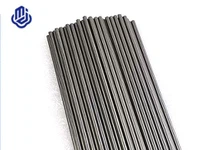
The answer is yes, titanium is suitable for electrolysis.
Titanium has many advantages in the electrolysis process, making it the preferred material for electrolyzer systems. In modern industrial systems such as water electrolysis for hydrogen production, chlor-alkali industry, and metal purification, the performance of the core component of the electrolyzer system - the anode material - directly determines the energy conversion efficiency, equipment life, and production cost. Titanium anode plates have gradually become the preferred material for electrolyzer systems due to their unique material properties.

Graphite, lead, or platinum-based electrodes were widely used in traditional electrolyzer systems, but these materials have significant defects under extreme working conditions. Titanium anode plates have solved three major technical problems through material science innovations, with the synergistic effect of titanium matrix and composite coating:
1. Corrosion resistance: self-healing mechanism in dynamic equilibrium
The dense oxide film (TiO₂) formed on the surface of the titanium anode plate can stably exist in acidic (pH=1~3) or strongly alkaline (pH>13) environments. For example, after running continuously for 8000 hours in a 5 mol/L hydrochloric acid solution at 90°C, the corrosion rate of the titanium anode is only 1/50 of that of the traditional lead electrode, and the life span is extended to more than 5 times.
This passivation layer continuously self-repairs through dynamic redox reactions, effectively resisting the penetration of aggressive ions such as Cl⁻ and H⁺.
2. Conductivity optimization: synergistic enhancement of gradient coatings
Through magnetron sputtering or plasma spraying technology, multi-metal oxide coatings such as IrO₂-Ta₂O₅ and RuO₂-SnO₂ can be loaded on the surface of the titanium substrate. The resistivity of this type of coating is as low as 3×10⁻⁴
Ω·cm, which significantly reduces the overpotential of the oxygen evolution reaction (OER). Experimental data show that at a current density of 2 A/cm², the oxygen evolution overpotential of the titanium anode is 280
mV lower than that of the lead electrode, and the power conversion efficiency is increased by 15%~20%.
3. Mechanical and thermal stability: reliable guarantee under extreme working conditions
The tensile strength of titanium alloys (such as Ti-6Al-4V) is over 900 MPa. Combined with the porous structure (porosity>35%) formed by laser etching, it can maintain structural integrity at ultra-high current density of 10 kA/m². For example, in zinc electrolysis applications, titanium anodes have been running continuously for 12 months without substrate deformation or coating shedding.
In addition, the melting point of titanium is as high as 1668℃, and it can remain stable in 200℃ electrolyte.
Baoji JM-TITANIUM-Professional anode design and manufacturer
Over the years, we have been specialized in anode research and development, production and manufacturing, and our products are exported to many countries around the world. Various series of anodes can be designed and produced according to the actual environmental parameters of different users. You are welcome to visit and negotiate.
Nicole
Company: Baoji Jimiyun Dynamic Co., Ltd
Country:China
Add:Baoti road,Jintai,Baoji city,Shaanxi,China
Cel:+86 13369210920
Gmail:nicole@jmyunti.com
Website:www.jm-titanium.com