Gmail:alisa@jmyunti.com
Titanium electrodes in the chlor-alkali industry are mainly used for electrolysis of brine to produce chlorine and caustic soda. In this process, titanium electrodes show excellent corrosion resistance and stability, making them a key material in the chlor-alkali industry. Titanium electrodes are usually coated with precious metal oxides such as ruthenium and iridium to enhance their electrocatalytic properties. In addition, titanium mesh and titanium plate are also commonly used in electrodialysis and water treatment processes in the chlor-alkali industry. These titanium parts can maintain stable performance in harsh chemical environments, thereby ensuring efficient chlor-alkali production.
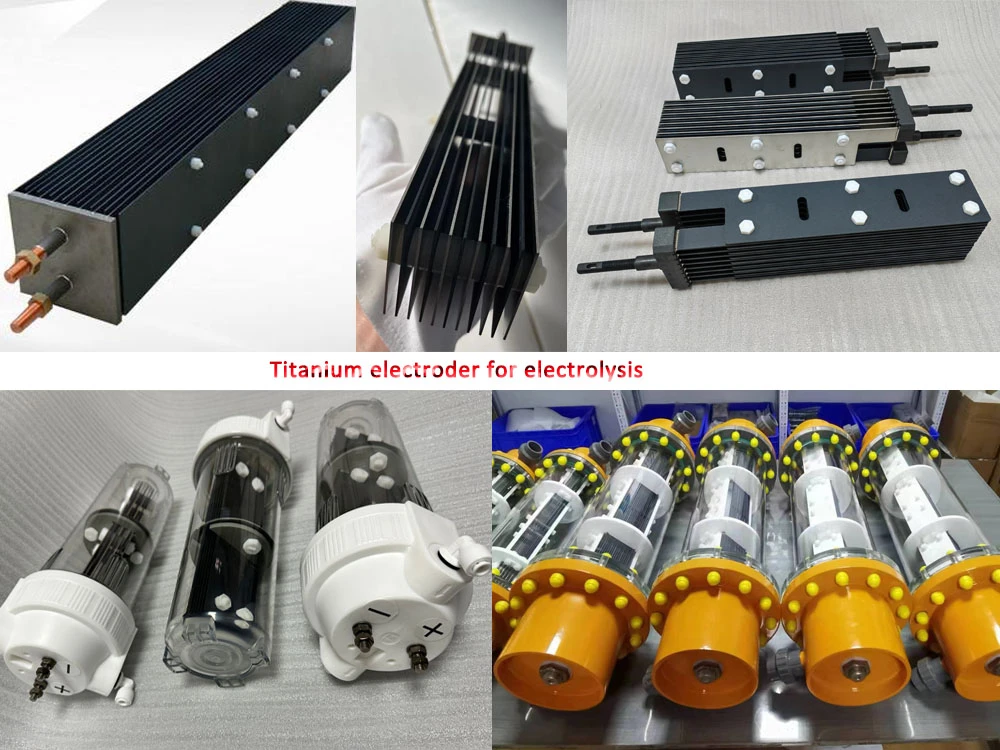
The use of our company's coated electrodes in chlor-alkali production has the advantages of small loss, greatly reduced chlorine potential compared with graphite electrodes, and stable size and shape. Compared with graphite electrodes, under the same electrolysis environment, the product quality is high, the energy consumption is low, and the chlorine purity is high.
Chlorine potential: ≤1.13V
Polarization rate: ≤40mv
Enhanced life: ≥3000min 10000A/m²
Enhanced weight loss: ≤10mg
Shape: according to customer requirements. Product geometry: mesh box type, monopolar multi-element plate anode group or other forms.
Advantages:
1. Zero distance between anode and diaphragm reduces cell pressure and saves energy;
2. Can work under high current and increase the capacity of electrolytic cell;
3. Increase the diameter of conductive rod to reduce resistance in the structure.
If you need anything, please contact me!
Company: Baoji Dynamic Trading Co., Ltd
Country:China
Add:Baoti road,Jintai,Baoji city,Shaanxi,China
Cel:+86 18391896637(WHATSAPP)/18391894207
Gmail:alisa@jmyunti.com
Website:www.jm-titanium.com