Products Description

Our company is mainly engaged in the production of nickel-titanium memory alloy materials, but also the production of titanium materials and titanium anode, the company in strict accordance with the requirements and ASTMF2063-2012 standards for production, the establishment of a series of complete systems.
Nitinol Wire Diameters And Tolerances :
| Wire Diameter | Tolerances |
| 4.00-2.00mm | ±0.020mm |
| 2.00-1.00mm | ±0.015mm |
| 1.00-0.35mm | ±0.010mm |
| 0.35-0.26mm | ±0.007mm |
| 0.26-0.15mm | ±0.005mm |
| 0.15-0.05mm | ±0.004mm |

Picture display


What is the difference between stainless steel and nitinol material?
For traditional materials such as 304ss, which are commonly used for medical purposes, the elastic deformation in the human body is often limited to about 1%, and the strain is proportional to the applied load. When the Niti material is applied in the human body, it can withstand large strains without increasing stress, and the strain will decrease at low but constant stress, and can elastic deform up to 10% of the strain in a non-linear manner, and its stress-strain behavior is very similar to that of the human structure (bone, muscle, etc.).
From this level, the matching of Niti material and human body is explained.
At the same time, when Niti implants are properly surface treated by electropolishing and passivation, a passivated titanium oxide layer forms, forming a barrier that prevents corrosion and the release of toxic nickel ions into the bloodstream, which demonstrates its biocompatible properties.
In the design of related products, it is necessary to ensure that the Niti pipe has a uniform wall thickness, so as to ensure the smooth subsequent processing; At the same time, the corresponding material strength is selected and confirmed by functional equipment testing to ensure that it meets the mechanical requirements.
Differences in price:
First, the cost is relatively high, especially compared to the common 304ss.
In addition, and other materials are difficult to weld. Today, if you want to connect Niti to 304SS, you need special intermediate materials and equipment, and this is one of the technical points of some high-end guides.
Based on this, in some current designs with Niti, it is often combined with 304ss, which saves costs and is also conducive to subsequent assembly.
Application

nitinol wire has the property of memory shape and can change shape by heating or adjusting temperature, so it is used to make dental braces.
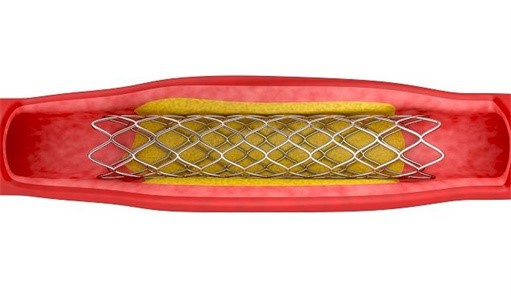
Because of its high strength and lightweight characteristics, nickel-titanium wire can be used to manufacture aircraft parts, such as engine nozzles, aircraft structural parts and so on

It can also be used as a heart stent
How to melt nitinol wire?
Smelting nitinol wire is a complex process that requires a certain amount of expertise and technology. Here is a general process:
Step 1: Prepare
First, collect the required materials and equipment, including nickel-titanium wire, melting furnace, protective gas, etc. Ensure that the working environment is clean and clean and that operators wear appropriate protective equipment.
Step 2: Prepare the nitinol wire
The nickel-titanium wire is weighed to the required ratio and then placed in the melting furnace. Ensure the quality and quantity of nitinol wire meet the requirements.
Step 3: Heat smelting
The melting furnace is heated to the desired temperature, usually the melting point of nickel-titanium wire is around 1200°C. During the heating process, protective gases, such as nitrogen or argon, can be used to protect the nickel-titanium wire from oxidation.
Step 4: Stir and mix
During the heating process, the nickel-titanium wire can be stirred and mixed with tools such as agitator to ensure uniform dissolution.
Step 5: Cool and set
When the nickel-titanium wire is completely dissolved, the melting furnace can be removed from the heating source and allowed to cool naturally. The nickel-titanium wire will gradually solidify into a solid, forming the desired shape and structure.
Step 6: Remove and process
Finally, the melted nickel titanium wire is taken out, and the necessary processing is carried out, such as cutting, grinding, etc., and the required finished product is finally obtained.
It should be noted that during the entire smelting process, attention should be paid to controlling temperature and time to avoid overheating or excessive heating, while ensuring the safety of the operator and the protection of the environment. I hope the above steps will help you understand how to melt nickel-titanium wire.
Factory picture



Do you know the significance of nitinol ratio?
The Ni-Ti ratio is key to the manufacture of nickel-titanium alloys because it changes the number of electrons available for bonding, which has a significant impact on the phase transition temperature properties of the manufactured material, which fundamentally determine the material's superelasticity and shape memory. Studies have shown that the transition temperature is very sensitive to the ratio of nickel (Ni) and titanium (Ti), and the transformation temperature of the alloy will change by 100℃ when the alloy composition changes by 1%.
In most applications, the conversion temperature needs to be controlled within ± 5 ° C, which means that the alloy composition must be controlled within ± 0.05%. Commercially, Nitinol has a phase transition temperature range of -100 ° C to 100 ° C and a hysteresis temperature of 30-50 K. Studies have shown that when the proportion of nickel is close to 60%, the shape memory effect of the alloy will be reduced, but its heat treatment ability will be enhanced. For medical devices and surgical implants, ASTM F2063 requires nickel-titanium alloys to be 54.5-57% nickel and the remainder titanium.
Packaging and transportation

Packing cartons are generally used, and large quantities of goods over 50 kg are packed in wooden cases.
Express generally support DHL,FEDEX,UPS
Contact information
Country:China
Add:Baoti road,Jintai,Baoji city,Shaanxi,China
Cel/Whatsapp :+86 18309262795
Email:annie@jmyunti.com
Website:www.jm-titanium.com
Hot Tags: nitinol wire, China, suppliers, manufacturers, factory, customized, wholesale, buy, price, cheap, sale, quotation, in stock, free sample, titanium hexagon domed cap nuts, titanium pipe for heat exchanger, titanium domed cap nuts, Titanium Cap Nut, periodic table of elements ti, DIN7985 titanium bolt