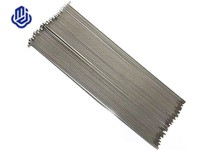
Properties of titanium
High strength: 1.3 times of aluminum alloy, 1.6 times of magnesium alloy, 3.5 times of stainless steel, the champion of metal materials.
High thermal strength: the use temperature is several hundred degrees higher than aluminum alloy, and it can work for a long time at a temperature of 450 ~ 500 ° C.
Good corrosion resistance: acid resistance, alkali resistance, atmospheric corrosion resistance, pitting corrosion, stress corrosion resistance is particularly strong.
Good low temperature performance: Titanium alloy TA7 with very low gap elements can maintain a certain plasticity at -253 ° C.
High chemical activity: high chemical activity at high temperature, easily react with gas impurities such as hydrogen and oxygen in the air to generate a hardened layer.
The thermal conductivity is small, the elastic modulus is small: the thermal conductivity is about 1/4 of nickel, 1/5 of iron, 1/14 of aluminum, and the thermal conductivity of various titanium alloys is about 50% lower than the thermal conductivity of titanium. The elastic modulus of titanium alloy is about 1/2 that of steel.
Classification and use of titanium alloys
Titanium alloys can be divided into: heat-resistant alloys, high-strength alloys, corrosion resistant alloys (titanium-molybdenum, titanium-palladium alloys, etc.), low-temperature alloys and special functional alloys (titanium-iron hydrogen storage materials and titanium-nickel memory alloys).
Although the history of titanium and its alloys is not long, it has won a number of honorable titles because of its extraordinary properties. First won the title of "space metal". It is light weight, strong and high temperature resistant, especially suitable for the manufacture of aircraft and various spacecraft. About three-quarters of the world's titanium and titanium alloys are used in the aerospace industry. Many parts originally made of aluminum alloy have been converted to titanium alloy.
Aerospace applications of titanium alloys
Titanium alloy is mainly used in aircraft and engine manufacturing materials, such as forged titanium fans, compressor discs and blades, engine covers, exhaust devices and other parts of the aircraft girder frame and other structural frame. The spacecraft mainly uses the high specific strength, corrosion resistance and low temperature resistance of titanium alloy to manufacture various pressure vessels, fuel tanks, fasteners, instrument straps, frames and rocket shells. Artificial Earth satellites, lunar modules, manned spacecraft and space shuttles also use titanium alloy plate welds.
In 1950, the United States first used the rear fuselage heat shield, wind hood, tail hood and other non-bearing components on the F-84 fighter-bomber. Since the 1960s, the use of titanium alloy has moved from the rear fuselage to the middle fuselage, partially replacing structural steel to manufacture important load-bearing components such as spacer frames, beams, and flap slides. Since the 1970s, civil aircraft began to use a large number of titanium alloys, such as Boeing 747 passenger aircraft with more than 3640 kilograms of titanium accounting for 28% of the weight of the aircraft. With the development of processing technology, a large number of titanium alloys are also used in rockets, satellites and spacecraft.
The more advanced the aircraft, the more titanium it uses. The titanium alloy used by the F-14A fighter in the United States accounts for about 25% of the weight of the aircraft; 25.8 percent for F-15A fighters; The United States fourth-generation fighter jet uses 41% titanium, and its F119 engine uses 39% titanium, which is currently the highest amount of titanium aircraft.
The reason why titanium alloys are widely used in aviation
The top speed of modern aircraft has reached 2.7 times the speed of sound. Flying at supersonic speeds that fast would cause the plane to rub against the air and generate a lot of heat. When the speed of flight reaches 2.2 times the speed of sound, aluminum alloy can not withstand. High temperature resistant titanium alloys must be used.
When the thrust-weight ratio of the aero engine is increased from 4 to 6 to 8 to 10, and the compressor outlet temperature is correspondingly increased from 200 to 300 ° C to 500 to 600 ° C, the original low-pressure compressor disc and blade made of aluminum must be changed to titanium alloy.
In recent years, scientists have made new progress in the study of titanium alloy properties. The original titanium alloy composed of titanium, aluminum and vanadium has a maximum working temperature of 550 ° C ~ 600 ° C, and the newly developed aluminum titanide (TiAl) alloy has a maximum working temperature of 1040 ° C.
Using titanium alloy instead of stainless steel to make high-pressure compressor discs and blades can reduce the weight of the structure. For every 10 percent reduction in weight, the plane saves 4 percent in fuel. For rockets, every 1kg of weight reduction can increase the range of 15km.
Machining characteristics analysis of titanium alloy
First of all, the thermal conductivity of titanium alloy is low, only 1/4 of steel, 1/13 of aluminum, and 1/25 of copper. Due to the slow heat dissipation of the cutting zone, which is not conducive to the heat balance, in the cutting process, the heat dissipation and cooling effect is very poor, easy to form high temperature in the cutting zone, and the deformation and rebound of the parts after processing are large, resulting in the increase of cutting tool torque, fast cutting edge wear, and reduced durability.
Secondly, the thermal conductivity of titanium alloy is low, so that the cutting heat accumulation in the small area near the cutting tool is not easy to distribute, the front tool surface friction is increased, it is not easy to remove chips, the cutting heat is not easy to distribute, and the tool wear is accelerated. Finally, the chemical activity of titanium alloy is high, and it is easy to react with the tool material at high temperature, forming dissolution and diffusion, resulting in the phenomenon of sticking, burning and breaking the knife.
Country:China
Add:Baoti road,Jintai,Baoji city,Shaanxi,China
Cel/Whatsapp :+86 18309262795
Email:annie@jmyunti.com
Website:www.jm-titanium.com