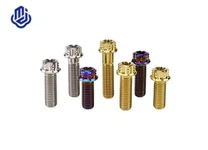
Titanium anode for electrolyzing water to sterilizing water

The titanium electrode is on the titanium substrate, the commonly used substrate is TA1/TA2/GR1/GR2 and other materials, and the anode is coated with a layer of oxide coating through multiple processes. It is not an ordinary metal material, but the field of electrochemical corrosion and protection. Therefore, when choosing a titanium electrode manufacturer, pay attention to whether the main business scope is electrochemical electrodes, not titanium or metal materials.
The high temperature of the electrolytic cell can be achieved by changing the distance between the electrodes and converting the electrical energy consumed by the ohmic voltage drop into heat energy. When electrolytically melting, the tank body can be iron or nickel. When electrolyzing molten electrolyte containing chloride, a small amount of water is inevitably brought into the raw material, which will make the anode wet and have a strong corrosion effect on the electrolytic cell. Therefore, electrolyzing molten chloride The electrolytic cell is generally made of ceramic or phosphate material, and iron can be used for the unaffected parts. The cathode and anode products in the molten salt electrolytic cell are also required to be properly separated, and should be drawn out of the tank as soon as possible, so as to prevent the cathode product from floating on the surface of the electrolyte for a long time, and will further interact with the anode product or oxygen in the air.
According to the connection mode of the electrodes, the electrolyzer can be divided into two types: unipolar and bipolar. The electrodes of the same polarity in the unipolar electrolytic cell are connected in parallel with the DC power supply, and the polarity of both sides of the electrodes is the same, that is, both are anodes or cathodes at the same time. The electrodes at both ends of the bipolar electrolyzer are respectively connected to the positive and negative poles of the DC power supply to become the anode or cathode. When the current flows through the electrolytic cell through the electrodes in series, one side of each electrode in the middle is the anode and the other side is the cathode, so it has bipolarity. When the total electrode area is the same, the current of the bipolar electrolyzer is small, the voltage is high, and the investment of the required DC power supply is less than that of the unipolar electrolyzer. The bipolar type generally adopts the structure of a filter press, which is relatively compact. But it is easy to leak and short circuit, and the groove structure and operation management are more complicated than the unipolar type. The cross-section of the monopolar electrolyzer is generally rectangular or square, and the cylindrical shape occupies a large area, and the space utilization rate is low, so it is rarely used.
Titanium anode advantages:
In chlor-alkali production, after using titanium anode, the product has high quality, high purity, no CO2, and high alkali concentration, which can save heating steam and energy consumption.
It has strong corrosion resistance and can work in many electrolytic media with strong corrosion and special requirements.
The base metal titanium can be used repeatedly.
The advent of metal anodes, designed and industrialized using ion-exchange membrane electrolysis technology that has recently emerged in the chlor-alkali industry.
Company: Baoji Dynamic Trading Co., Ltd
Country:China
Add:Baoti road,Jintai,Baoji city,Shaanxi,China
Cel:+86 18391896637(WHATSAPP)
Gmail:alisa@jmyunti.com
Website:www.jm-titanium.com